
- Get directions
- Call now
- Bookmark
- Share
- Website
- Send an email
- prev
- next
In brief
Beautifully untouched by time and one of the oldest pubs in the country, this ancient and unique hostelry is packed to the rafters with a spell-binding history, tales of folklore and curses, and many, many ghosts.
Category
About
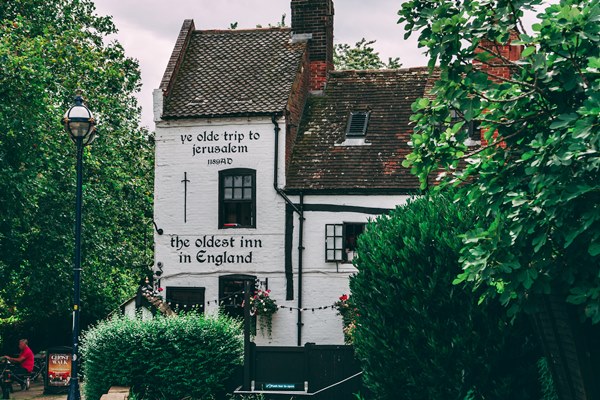
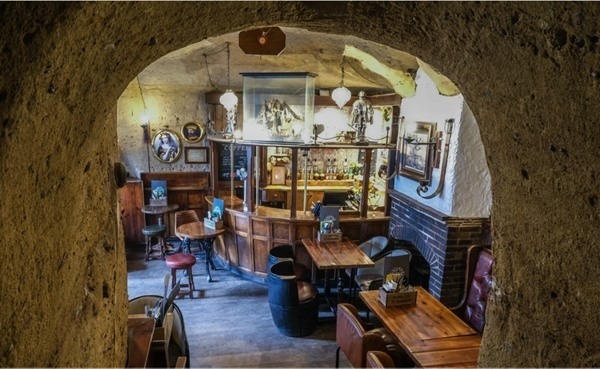
No voyage to the city of caves would be complete for any paranormal pilgrim without a visit to the roaringly haunted and historic pub, Ye Olde Trip to Jerusalem. Spiriting visitors back to a bygone era and bursting with antiquated charm, this ancient hostelry claims to have been serving the city’s drinkers since Richard the Lionheart was crowned King Richard I in 1189.
Built against the sandstone caves that link to Nottingham Castle, the pub’s cellars were once used as a brewhouse for the medieval fortress.
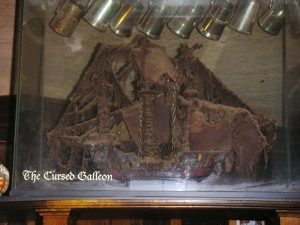
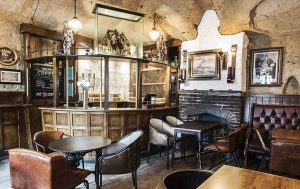
In addition to the many ghosts that ignore calls for time at the pub, the place also has its share of folklore and legends. A dusty old model galleon ship sits in a glass case perched above the bar in the Rock Lounge. Said to have been a gift from an old sailor in the 1700s, legend has it that it is cursed, and that anyone who disturbs and cleans the galleon will meet with an early death. Several are said to have fallen foul of its curse, leading to its being safely ensconced in a glass case.
The Trip is also home to a rickety, old wooden chair, which is claimed to increase the fertility of any woman who sits in it.
Another fascinating legend associated with the place is that one of its tunnels towards the rear of the building houses a small secret passage that directly connects to Nottingham Castle. According to tradition, the passage, known as Mortimer’s Hole, was used in the 1300s as a secret hiding place for Queen Isabella of France and her lover, Roger Mortimer, Earl of March.
Though historical accounts vary, some say Mortimer murdered Queen Isabella’s husband, King Edward II, and that she had helped him dispose of the body. What isn’t disputed, however, is that in October 1330, Roger Mortimer was captured at Nottingham Castle, with soldiers gaining access via the secret passageway. Mortimer was condemned without trial and suffered an agonising execution in London, where his body was left out on display for two days.
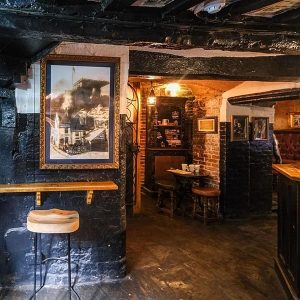
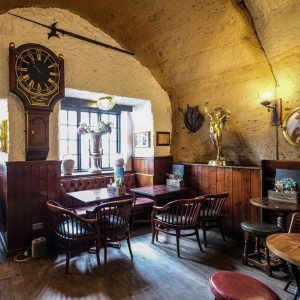
Visitors to Ye Olde Trip to Jerusalem are treated to a historic cache of old wooden beams, roughhewn sandstone walls, and dimly lit nooks that evoke an abiding sense of characterful authenticity. An arresting display of artefacts, old photographs, memorabilia, and dusty collectibles only serves to add to the patina of heritage and legend etched deep into its foundations.
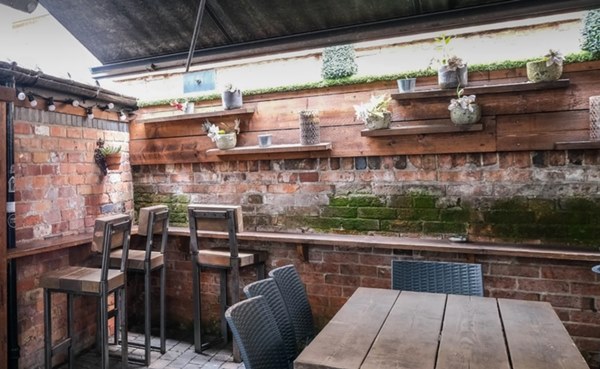
Exuding a warm, chatty, and easy-going atmosphere, this vibrant tavern attracts locals and tourists alike, many searching out its unrivalled reputation for ghosts, folklore, and history. With paved outdoor seating, local ales, and a range of filling menu options on offer, the exceptional and unique Ye Olde Trip is certainly one of Nottingham’s cardinal paranormal wonders.
History
An examination of the fascinating history of Ye Olde Trip to Jerusalem, which claims to have been serving ale since 1189, shows that while parts of its foundations could be even older, other parts almost certainly date from the late 1600’s.
The pub building is situated in Brewhouse Yard, a flat, level area at the base of a sandstone ridge known as Castle Rock. Perched on top of Castle Rock and steeped in almost 1,000 years of history is Nottingham Castle, which began life as a wooden motte and bailey construction in 1068.
Records show that in medieval times, Brewhouse Yard was known as Rock Yard, and until 1621, when it was sold by the Crown, it formed part of the Nottingham Castle estate. Rock Yard was comprised of a myriad of caves, which had a number of purposes and were used as dwellings and malthouses in the production of ale. Documents used around the time of the sale show that in 1610 and 1618, the caves were referred to as “the brewing house under the castle,” by which time the area was probably known as Brewhouse Yard rather than Rock Yard.
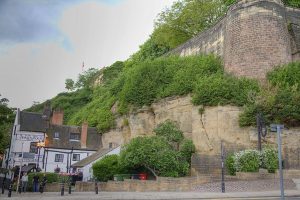
The building now known as Ye Olde Trip to Jerusalem is essentially a brick and timber-framed frontage that was constructed in the 1600s against Brewhouse Yard's former brewing house, incorporating its network of medieval carved cellars and caves. The Trip’s solid cellars and rock-cut chimney vents provide surviving evidence that they once served as part of the castle's medieval brewing house.
It was first recorded as a public house in 1760, when it was named The Pilgrim with first-time licensee William Marriott at the helm. Historic England estimates that the timber-framed building was likely to have been built around 1680, around the same time that Nottingham Castle underwent a major reconstruction. By 1799, the tavern had changed its name to the present Ye Olde Trip to Jerusalem.
Both its first and successive names are thought to acknowledge the practice of medieval pilgrims and crusaders meeting at the inn before travelling to the Holy Land. So, did the castle brewing house actually quell the thirst of Richard the Lionheart and his army of crusaders in 1189? Was it really where the members of the Third Crusade stopped off for rest and refreshment before travelling to Jerusalem in an attempt to free it from Muslim capture? Or was this notable year decided upon to create a commercial appeal and an everlasting and romantic connection with the fighter monarch?
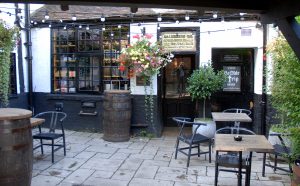
In his 1909 article, The Old Inns of Brewhouse Yard, Harry Gill suggests an alternative explanation could possibly be found in Deering’s History of Nottingham, published posthumously in 1751. Deering refers to a religious sect known as the Philadelphians, who called themselves the Family of Love and would meet at Brewhouse Yard, referring to each other as pilgrims.
With historians acknowledging the existence of a labyrinth of blocked-up passages and concealed doors housed underneath the building, the Trip’s cellars also show their heritage through the existence of a cockfighting pit. This once popular barbaric blood sport was first banned by King Edward III in 1365. Did the ban send this cruel practice to the concealed safety of the Rock Yard caves, where it was illicitly conducted in what is now the pub’s cellars?
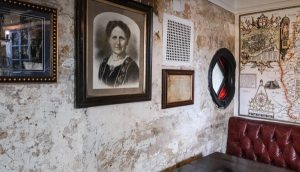
Part of Nottingham Castle’s medieval and sinister gaol is also thought to have extended into the caves that now form the pub cellars. with one area once being used as a condemned cell for those prisoners being put to death. Many convicts were brutally chained to the sandstone walls, with dozens held at one time. Evidence of its former use can be seen from the remains of an ancient cell door and gaolers seating area.
Whatever the original date of Ye Olde Trip to Jerusalem, it undoubtedly seems that in one way or another, and from one part of its amazing building or another, it has been filled with centuries of life and has been providing ale to the city’s citizens for almost one thousand years.
What a history!
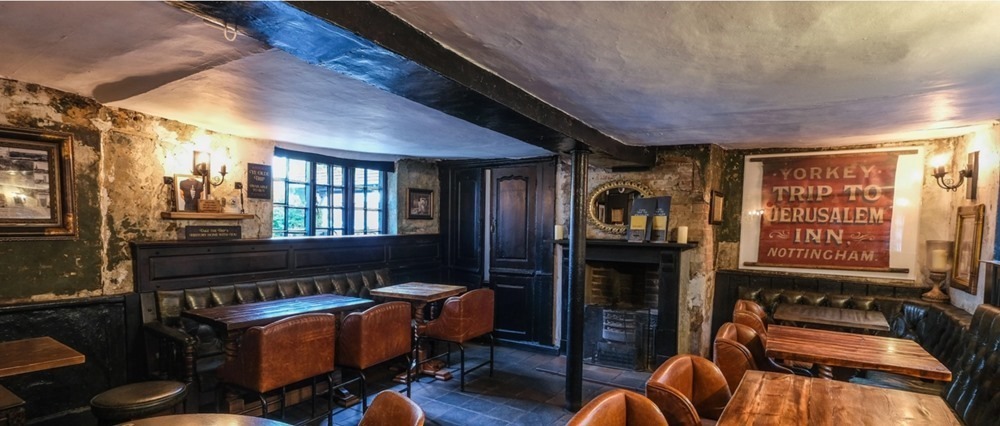
Ghostly activity
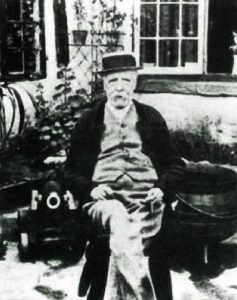
- The ghost of former landlord George Ward (his image below is on display at the pub), who was also known by the nickname Yorkey, is frequently seen sitting in the lounge area of the bar that takes his name. George took on the pub license in 1894, and it would pass to successive generations of the Ward family until 1989. Apparently, George was known to be a practical joker in life, and it seems his personality remains unchanged in the afterlife, as he’s been reported as making loud noises and pulling on the clothes of staff and customers in an attempt to scare them.
- Like that of her predecessor George, the ghost of Ada Ethington-Ward, whose licensee plate remains on display at the pub along with much of her property, including old photographs of 1930’s music hall stars, also haunts the old drinking den. Known as Auntie Ada, she was the licensee from 1950 to 1966 and is said to haunt the Snug. During her tenure, the Snug area was thought to have been used as Ada's bedroom and was the place where she passed away.
- In addition to Auntie Ada’s ghost, mysterious knocks and bangs and the sounds of a growling dog are regularly heard coming from an empty Snug, and when there are no animals in the building. Witnesses also claim to hear an old grandfather clock ticking and chiming.
- The apparition of a tall man dressed all in black has often been seen by both shocked staff and customers, who describe him as charging about the place as though in a hurry before completely vanishing.
- The ghostly figure of a little girl has been seen playing on the stairs that lead from the Rock Lounge.
- Several previous landlords tell of seeing the apparitions of both a man and a woman and hearing the disembodied sounds of voices in conversation, blood-curdling screams, and the sounds of glass being smashed. Investigations of the cause prove fruitless, and no explanations can be found.
- The full-bodied apparition of a woman wearing a crinoline skirt, typical of the 1850s and 1860s, has been spotted walking down the stairs to the cellar. This popular fashion was worn by women of all social classes at this time, when census records show that many women lived and worked in pubs and were often actually the ones responsible for the day-to-day running of the premises.
- Poltergeist activity regularly occurs, especially in the Rock Lounge, where glasses, bottles, and other items of property are moved by what seem to be unseen hands. Staff complain that various items also appear to go missing only to turn up later in some unexpected or unusual place.
- A sweet, old-fashioned perfume of roses and lavender frequently fills the air or appears to waft past people without any logical explanation. The strong perfume then disappears as quickly as it came.
- On one occasion, a group of five people present in this part of the cellar all swore that they saw the ghosts of two soldiers. Others claim to feel taps to the shoulder from icy fingers, hear the sounds of footsteps crunching on sandstone and the eerie groans of men in pain, and see unexplained flashes of light. Is this all down to the imagination working overtime in a dank, cold cellar with a well-known gruesome past? Or do the long-suffering souls that once laboured there somehow remain trapped in the ether of their torment, reaching out to the living for a merciful release?
Video
Location
-
1 Brewhouse Yard, Nottingham NG1 6AD
Access
Please note that as a historical building, access for customers using wheelchairs and with restricted mobility is limited to the ground floor.
Add a review