
- Get directions
- Call now
- Bookmark
- Share
- Website
- Send an email
- prev
- next
In brief
The ethereal presence of generations past can still be detected around every grand corner of the famously haunted Bestwood Lodge. With a magnificent history, lashings of Victorian elegance, and ghost sightings since the 1940's, the lodge is a treasured favourite in paranormal circles.
*Please note that whilst Bestwood Lodge welcomes non-residents to the hotel's Foyer Bar and Parkside Restaurant. (Read our ghostly activity below to find out which of the resident ghosts is seen in the restaurant!).
Category
About
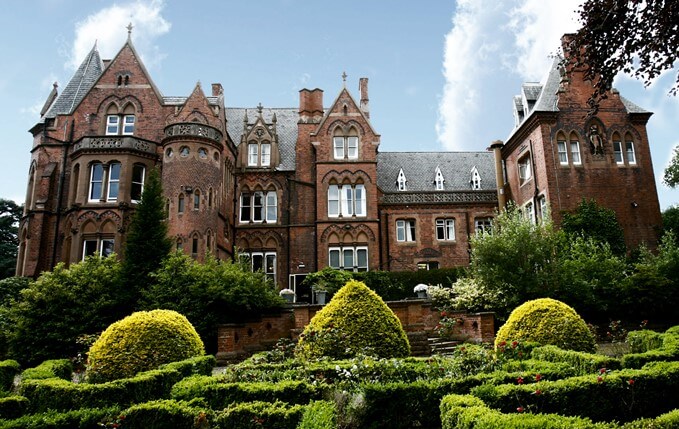
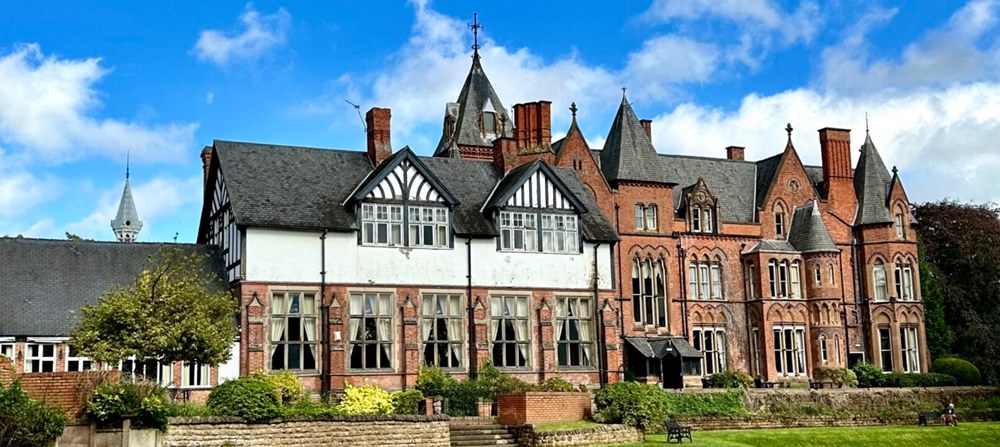
With an intriguing and traceable past to match any history buff’s dream, Bestwood Lodge in Nottingham boasts a rich heritage spanning close to 900 years. Adapted in 1979 when it was converted into a country house hotel, the impressive property we see today was built in 1863 on the foundations of a medieval hunting lodge.
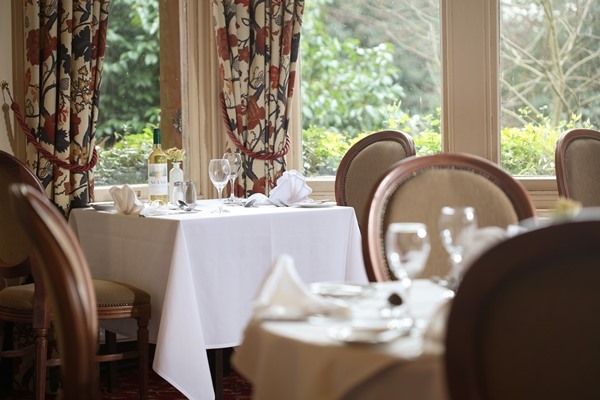
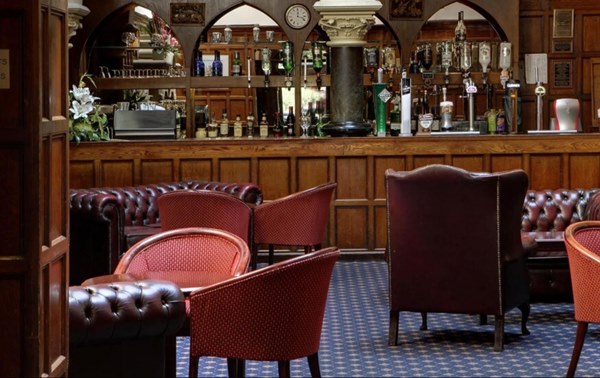
Bestwood Lodge now offers guests a cosy and relaxing stay in one of the charming and individually designed rooms that retain the period elegance of their Victorian origin. The lodge features a stylish bar, the inviting Parkside Restaurant, and with a pretty summer terrace for al fresco dining and cosy log fires for winter months, travellers can enjoy a year-round restful and replenishing stay.
Providing easy access to Nottingham’s other haunted hotspots, such as the National Justice Museum, Newstead Abbey, and Woollaton Hall, the fascinating Bestwood Lodge provides a perfect stay for the city’s ghost tourists.
History
The original lodge at Bestwood was created to provide a lavish residence fit for monarchs participating in hunting expeditions in Sherwood Forest. Documentary sources dating back to 1160 refer to the Bestwood Estate when King Henry II granted permission to Lenton Priory to access the grounds to obtain wood for their own use. Successive monarchs continued to occupy Bestwood Lodge for hunting trips, including King Richard III, who stayed at Nottingham Castle prior to the Battle of Bosworth in 1485.
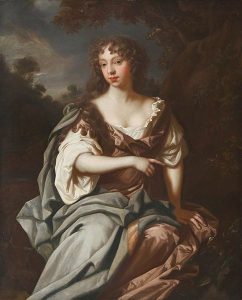
Bestwood Lodge remained a royal favourite until 1683, when King Charles II gifted the whole estate and the title of Duke of St. Albans to Charles Beauclark, his illegitimate son with mistress Nell Gwyn. Nell, who was thought to be the favourite and least grasping of the king’s many mistresses, often accompanied him on hunting excursions to Bestwood Lodge.
The property passed to successive Dukes of St. Albans until, in 1860, the 10th Duke demolished the medieval hunting lodge and engaged the services of French architect Samuel Sanders Teulon, who was tasked with creating a magnificent new house. Teulon spent the next three years designing and supervising the construction of the beguiling gothic, red brick property that stands today.
Bestwood Lodge remained a private residence under Beauclark family ownership until World War II. Many grand balls and extravagant parties were held to entertain aristocrats and members of high society, including the Prince and Princess of Wales, Benjamin Disraeli, and Prince Leopold. The Duke and Duchess also hosted fancy dress parties for the local children and held tea parties for local miners, ironworkers, and their wives.
In April 1885, a servant raised the alarm when he spotted smoke billowing from the drawing room windows. A telegram was dispatched to the fire brigade, which efficiently extinguished the blaze. While valuable paintings and furniture costing thousands of pounds were destroyed, little structural damage was caused. The house was sufficiently restored by the following December, when another grand party was held with no expense spared.
In 1900, Bestwood Lodge was leased to inventor and founder of the Raleigh Bicycle Company, Sir Frank Bowden, until he passed away at the house in 1921. The baronetcy and tenancy of Bestwood Lodge were transferred to Sir Frank’s son, Harold Bowden. Sir Harold and Lady Muriel Bowden remained at the lodge until 1934 and continued to throw lavish balls and social events, including a shooting party attended by Winston Churchill.
Following the death of the unmarried 11th Duke of St. Albans, Charles Beauclerk, in 1934, the family titles and Bestwood Lodge passed to his half-brother, Osbourne De Vere.
Like many large country houses, Bestwood Lodge was requisitioned by the War Office in 1939 for use as a World War II base and training facility. By 1940, the ground floor of the house had been adapted, and the ballroom, once the scene of so much jollity and celebration, was used as a hospital ward for the treatment of hundreds of injured soldiers.
After the end of the war in 1945, Bestwood Lodge remained under military use as a training base and was formally purchased by the Ministry of Defence in 1952. It was used by the armed forces until 1973, when the property was handed over to Gedling Borough Council. Various new uses were considered for the lodge, including a Fire Brigade Headquarters, until in 1979 it was sold to the Turner family, owners of Turners Banqueting Hall and Suite in nearby Mapperley, for conversion into a hotel.
Ghostly activity
- People describe picking up the strong scent of oranges, which many claim only occurs if children are present. Has folklore and the ghostly smell of oranges been created in some way due to the property’s association with history’s most famous former orange seller, Nell Gwyn? That said, many describe the scent as more like orange blossom, and witnesses reporting the phenomenon often have no prior knowledge of Nell Gwyn or her association with the lodge.
- Staff also commonly describe smelling a very sudden and strong, heady perfume that is quite overpowering for a few seconds before completely disappearing. It seems that this phenomenon was experienced by young soldiers as far back as 1942, when the lodge was requisitioned for military use during the war.
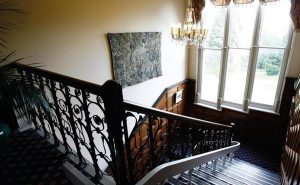
- In an article dated 26th March 1957 that appeared in the Nottingham Evening News, a gentleman named Mr. John Dann wrote in response to a previous discussion about the existence of ghosts. He described that as a member of the 70th Battalion of Young Soldiers, he was stationed at Bestwood Lodge in 1942. One night, as the platoon lay in bunk beds in the left wing of the house, near a spiral staircase, he and another soldier were quietly chatting as they struggled to sleep.
- Mr. Dann explained that suddenly, the air was filled with a strong, sweet, and heavy perfume. His friend had smelled the scent too, and both found it overpowering and quite nauseating. It disappeared after a few seconds. Mr. Dann went on to explain that a few nights later he was descending the staircase when the scent appeared again. This time the strong perfume was accompanied by a glowing light that passed straight through him, after which the scent disappeared.
- In the same article referred to above, Mr. Dann described a further strange experience that occurred whilst he was stationed at the lodge. One night when everyone was asleep, they were abruptly woken by a loud sound as though something had hit the ground after travelling through the air at great speed. Mr. Dann said several search parties were organised to locate what had caused such a noise, but nothing could be found.
- It appears that John Dann was not the only soldier to report an experience whilst stationed at Bestwood Lodge. TV historian and former Most Haunted team member, Richard Felix, who worked alongside Yvette Fielding in the popular paranormal show, had an interest in ghosts and the unexplained activated after his first ever experience at Bestwood Lodge in the 1970s.
- Richard was a young member of the territorial army at the time, stationed at the lodge. As the group of young TA cadets slept in the ballroom, Richard was suddenly woken by the sounds of a distressed male voice desperately calling out for a nurse and for someone to help him. The man sounded in such pain and anguish that Richard wanted to help him. He searched for the source of the noise but found nothing. It was only much later that Richard discovered that the ballroom had been used as a hospital for injured soldiers during World War II.
- Dogs behave anxiously as they approach the building and are described as pulling away as though fearful of entering the lodge.
- People describe feeling suddenly chilled and experiencing the sensation of the hairs standing up on the back of their necks but for no known reason.
- Staff and visitors describe seeing figures dressed in old-fashioned clothing walking through the corridors of the hotel before completely vanishing.
- The ghost of a tall man in a long grey coat has been witnessed many times, both seated in the restaurant and walking around the building.
- In an article that appeared in the Nottingham Guardian dated 13th December 1972, the reporter noted that the sighting of the ghost of a white lady was one of the most frequent supernatural occurences at Bestwood Lodge. A member of staff who did not wish to be identified described his own experiences while employed at the lodge. On two separate occasions in the very same area in one of the corridors, he described feeling suddenly frozen to the spot and unable to advance any further. He also told of a terrifying experience he once had in the chapel when he saw a black shape hovering above him, accompanied by an icy blast.
- In the same article referred to above, caretaker Ron Wood disclosed an eerie experience he and a night watchman once had when sitting chatting in an area then referred to as the telephone exchange. Mr. Wood described that the nearby communications door suddenly opened and slammed shut. The two men went to check and wondered if the door had somehow blown open and shut, so they securely locked the door only to have the same thing happen again. They returned to the door and were completely spooked to discover that the door was still locked with the key in place as they had left it.
Location
-
Bestwood Lodge, Bestwood Lodge Drive, Arnold, Nottingham NG5 8HT, UK
Access
The bar and restaurant areas at Bestwood Lodge are accessible to wheelchair users.
Please note that regretfully there are no ground-floor rooms for guests booking rooms and requiring wheelchair access or with mobility difficulties.
Region
A full record of any articles, websites, webpages, books, or other materials that have assisted us in the research and presentation of this listing can be found below.
‘The History of Bestwood Lodge’ (2024) Available at https://www.bestwoodlodge.co.uk/history/
Earp, F. (2020) ‘Bestwood Lodge.’ Available at https://nottinghamhiddenhistoryteam.wordpress.com/2020/03/25/bestwood-lodge/
‘Wartime Bestwood’ (undated). Available at http://www.fbcp.org.uk/local-history-story-collection.html
Granby, J. (1942) ‘Bestwood’ Available at http://www.nottshistory.org.uk/articles/doubleday/bestwood1.htm
Stevenson, P. & Taylor, K. (2022) ‘Haunted Nottinghamshire.’ Available at https://www.visit-nottinghamshire.co.uk/blog/read/2022/09/haunted-nottinghamshire-b4860
‘Wounded Soldier’ – Nottinghamshire Ghosts, Folklore and Forteana (2024) Available at https://www.paranormaldatabase.com/nottinghamshire/nottdata.php?pageNum_paradata=0&totalRows_paradata=41
Nottingham Guardian, 13th December 1972, ‘Ghostly Monk with a Death’s Head seen at Old Abbey.' Accessed at https://www.britishnewspaperarchive.co.uk/
‘Richard Felix’s Hallowe’en Tales’ (2009). Available at http://news.bbc.co.uk/local/derby/hi/tv_and_radio/newsid_8332000/8332602.stm
Hale, R. (2018) ‘Bestwood Lodge Hotel, One of Nottingham’s most haunted houses.’ Available at https://www.spookyisles.com/bestwood-lodge-hotel/
_-_Portrait_of_an_Unknown_Lady,_Called_%27Nell_Gwynne%27_-_1548027_-_National_Trust.jpg)
Add a review