
- Get directions
- Call now
- Bookmark
- Share
- Website
- Send an email
- prev
- next
In brief
Built on the site of a former convent by the celebrated Derby architect Joseph Pickford, this exquisite Georgian home turned museum retains the ghostly presence of four watchful souls who remain spiritually leashed to the place they once knew. Who are they, and why won't they move on?
Category
About
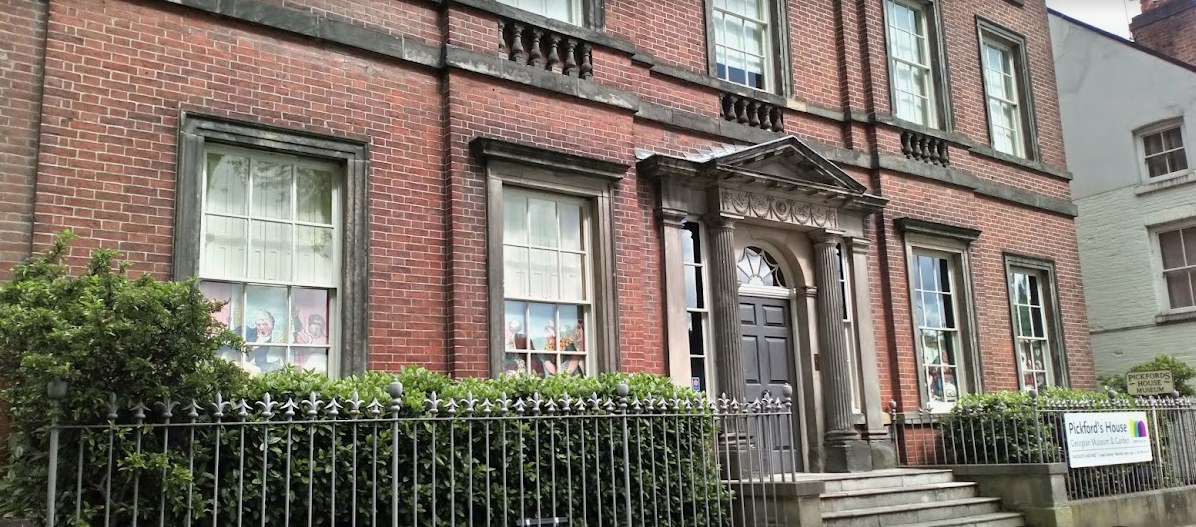
Situated in the centre of the supremely haunted city of Derby stands the architectural jewel known as Pickford’s House Museum. Attracting the makers of period dramas, the beautiful Georgian mansion has been used in several TV productions such as Pride and Prejudice, The Duchess, and The Diary of Anne Frank.
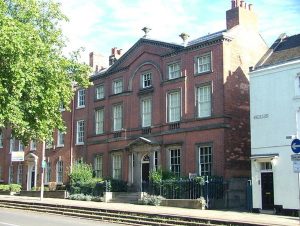
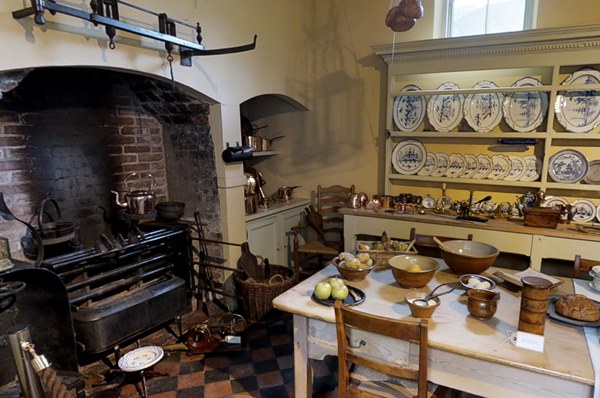
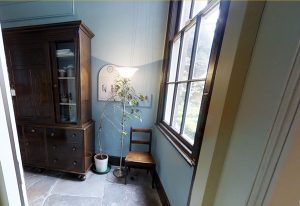
The elegant property is now used as a wonderful museum showcasing the lives of the Pickford family and their servants. With free admission, visitors are afforded the opportunity to explore the carefully curated rooms, which provide an invaluable glimpse into the lives of how prosperous families and their domestic staff lived in Georgian England.
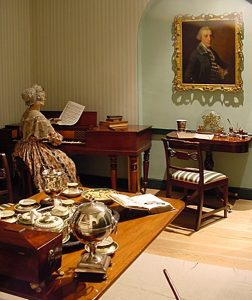
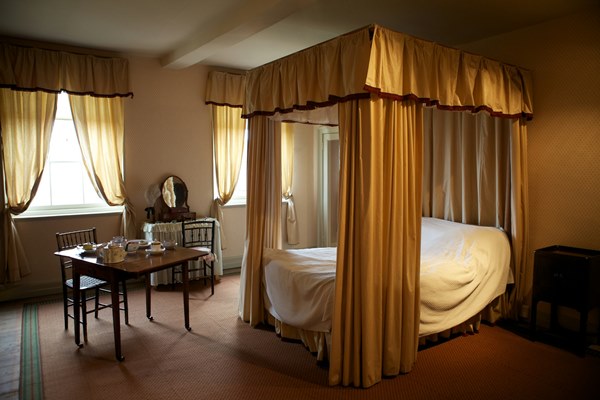
The museum is beautifully furnished with authentic antique pieces, artwork, and décor and uses historical collections, costume displays, and interactive exhibits to show not only Georgian styles but also those that evolved during the 19th and 20th centuries. An imitation air raid shelter reproduced in the cellar chronicles its vital role protecting its occupants during World War II.
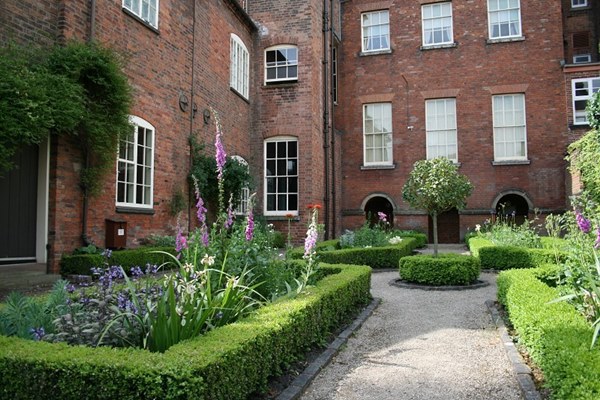
The lovely garden creates a tranquil and pretty setting with carefully arranged hedges and paths that embody the Georgian taste for neat and orderly outside spaces.
With a small cafe and gift shop and a plethora of ghostly activity (read more below), this charming house and museum provides a captivating experience and fascinating visit for both paranormal and history enthusiasts alike.
History
The site of Friars Gate where Pickford’s House Museum now stands was once part of a 48-acre plot of land owned by the only Benedictine nunnery in Derbyshire. Founded in the 12th century in an area later known as Nuns Green, the convent was dedicated to St Mary de Pratis (St Mary of the Meadows) and was the place where local noble families sent their daughters to be educated. In 1536, after almost 400 years in operation, the nunnery was dissolved by King Henry VIII following his break with the Church of Rome.
In 1555, Queen Mary I gave the land at Nuns Green to the Borough of Derby, following which it remained untouched due to the numerous restrictive covenants that were in place preventing any building or development.
In the mid-1760s and in desperate need of funds, the Corporation of Derby used an Act of Parliament to free the land from its contractual restrictions and divided it into various plots, one of which architect Joseph Pickford placed a successful bid. Records show that Joseph had completed the build and that he and his family were already living there in 1767, one year before the 1768 Act freeing up use of the land had passed through parliament.
Joseph Pickford was the nephew of renowned sculptor and stonemason also named Joseph Pickford. After being orphaned as a young child, Joseph left his family home in Warwickshire to live with his uncle in London. His uncle’s London property was situated in Hyde Park on the site now occupied by the Park Lane Hotel.
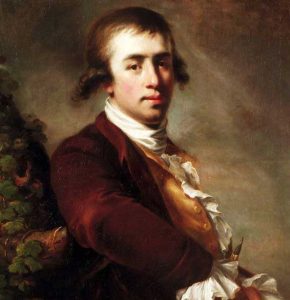
After completing his training in architecture and masonry under his uncle’s tutelage, Joseph Pickford travelled to Derby at the age of 24 to supervise the building of the magnificent Foremarke Hall in South Derbyshire. The hall was designed by Warwickshire architect and Pickford family friend David Hiorns, who passed away before construction could be completed. This captivating building is now the home of Repton Prep School.
While working in Derby, Joseph Pickford was also retained to carry out remodelling works at Longford Hall in the Derbyshire Dales. The assignment turned out to be pivotal for Joseph as he met and fell in love with Mary Wilkins, the daughter of the hall owner’s agent, Thomas Wilkins. The couple married in April 1762 and went on to have two sons.
Joseph Pickford was a driven and determined man and quickly gained an excellent reputation as a highly talented architect. His beautiful and sophisticated Friar Gate home had been purposely designed to impress prospective clients from Derby’s upper classes. The Pickfords threw lavish parties at their lovely home, where they entertained Joseph’s fellow Lunar Society members, which included painter Joseph Wright, potter Josiah Wedgewood, and scientist Erasmus Darwin (please see our listing for Erasmus Darwin House in Lichfield). Such powerful and influential friends ensured a steady flow of wealthy clients made their way to Joseph’s Friar Gate office, situated at the rear of his impeccably designed home.
Joseph Pickford’s incredible achievements as a supremely talented architect can still be seen at the stunning St Helen’s House in Derby and the beautiful Etruria Hall in Staffordshire. Tragically, many of his other properties have not survived, including his ornately designed Assembly Rooms in Derby, which were destroyed by fire in 1963.
After a short illness, Joseph Pickford died at his Derby home in July 1782. He was just 47 years of age. Joseph left his wife, Mary, and their two young sons, Thomas (13) and Joseph Jr. (10), financially secure, and they continued to live comfortably at the property. Mary Pickford sadly suffered a further tragic loss when her eldest son, Thomas, also died a few years later at the age of 20.
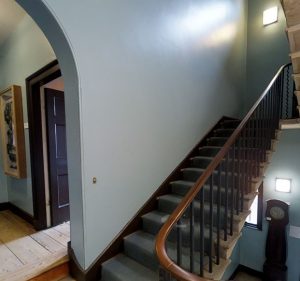
Youngest and surviving son Joseph became a graduate and fellow of Oriel College, Oxford, and pursued a career in the church. When Mary died in 1812, Reverend Pickford carried out various alterations and divided up the house, occupying the smaller part, which he accessed via a side door. Various other parts were sealed off, and the remainder and larger part of the house was rented first by a lady named Miss Knightley and later by a gentleman named Mr Smith.
In 1827, Reverand Pickford let out the larger part of the house to a wealthy lady named Mary Meynell, who used it to run an academy for the education of young ladies.
Reverand Pickford died in 1844 at the age of 72, leaving the Friar Gate property to his cousin William Pickford. It appears that William did not move into the house, and Miss Meynell continued to run her girl’s school from there until her death in 1858. It was around this period that the divisions of the house were removed and that it was again restored to a single dwelling.
Following Miss Meynell’s passing in 1858 and up until 1948, the property appears to have been purchased and occupied by a succession of doctors and surgeons. The final medic to own the property, Frederick Schofield, sold the house to architects Ernest Pedley and George Larkin. Given its history, it seems quite fitting and perhaps would have pleased Joseph Pickford that architects became the last private owners of the house. After they moved their practice from the property in 1982, it was purchased by the Derby Corporation, which had plans to convert the grand house into a museum.
Sadly, the corporation neglectfully and controversially ignored its Grade I protected status, which had been conferred in 1977. They set about replacing lime ash floors with concrete, removing chimneys, and causing damage to the original cornicing by trying to install glass partitions. Eventually, in 1988, following a political change in the council’s make-up, funds were invested for specialist works and repairs to be carried out to remedy the damage as much as possible.
In 2013, a cast iron blue plaque was suitably erected commemorating the incredible Joseph Pickford as the architect and original occupier of the beautiful Friar Gate property.
(In researching the history of Pickford House Museum, Most Haunted Places are indebted to “Pickford House, Derby: A Georgian Architect’s House” by Maxwell Craven, Georgian Group Journal 2020, Volume XXVIII, pages 65-84).
Ghostly activity
- Staff complain of hearing doors open and slam shut and the sounds of echoing footsteps in the corridors that have no explanation.
There are four full-bodied apparitions that have been witnessed at the property by both staff and visitors:
- The ghost of a small boy has been spotted in the rooms on the ground floor and in the garden. People walking on Friar Gate after the house is closed have also regularly reported seeing the figure of a young child looking out of the attic room window, which faces the street. Since the sightings, folklore appears to have established claiming that the boy is the son of Joseph Pickford, who it is said died young - a loss it is claimed the architect never recovered from. Research, however, shows that Joseph predeceased his two sons, who were aged 13 and 10 years old when their father passed away in July 1782. The eldest son, Thomas Pickford, died eight years after his father at the age of 20. So, who is the ghostly boy who still roams Pickford House and peers out of the upper-floor windows? There seems to be no existing description of the boy's clothing to help establish a time period. Is he perhaps the child of one of the various surgeons who occupied the house from 1858–1948?
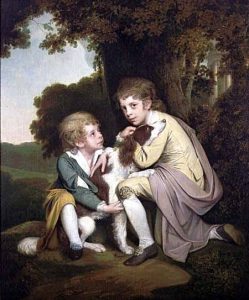
The Pickford children, Thomas and Joseph.
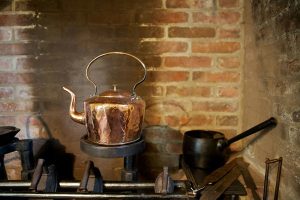
- The figure of a gaunt-faced woman has been witnessed near the kitchen area and is thought to have been a former member of the house domestic staff.
- The ghost of a man described as wearing Georgian-style clothing has been reported in the beautiful gardens at the property. He is described as leaning against a spade or tending to the garden, but as visitors watch or continue towards him, the ghostly gardener simply vanishes.
- The fourth apparition that has been noted at the house is that of a young girl who is often said to be skipping or dancing through the corridors of the house. Like the other ghosts at Pickford House Museum, she vanishes after a few seconds. Was this young girl once a pupil of the academy for young ladies, which occupied part of the house and was run by Miss Mary Meynell from 1827 until her death in 1858?
Location
-
41 Friar Gate, Derby DE1 1DA, UK
Access
Please note that due to the age and design of Pickford's House Museum, wheelchair access is only available on the ground floor, the lower ground floor, and the garden. There are unfortunately also no accessible disabled toilet facilities at the property.


Add a review