
- Get directions
- Call now
- Bookmark
- Share
- Website
- Send an email
- prev
- next
In brief
One of the most widely reported for paranormal activity of all English Heritage’s 400+ properties, Bolsover Castle scored top place as its most spooky in a poll of 1,800 staff. There are so many ghost sightings and unexplained happenings at the castle that staff keep a logbook of all their and visitors experiences.
Category
About
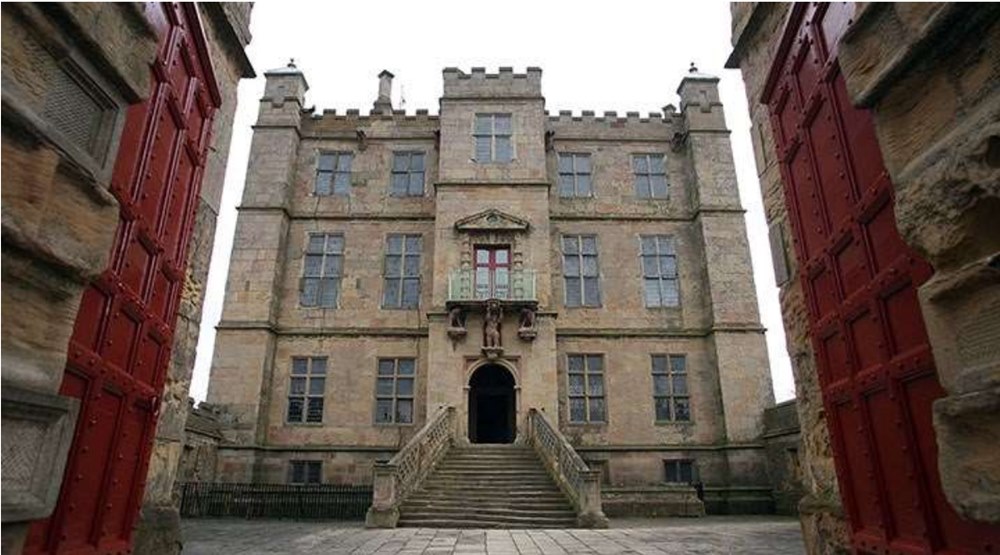
Positioned on top of an unsheltered hill, Bolsover Castle overlooks the north-eastern Derbyshire town of the same name, once dubbed “the Satanic capital of Britain.”
Alive with paranormal activity and a bulging list of sighted apparitions, the castle that stands today was built in the 1600s to create a sumptuous home for the noble Cavendish family and to provide a comfortable retreat from the family seat of Welbeck.
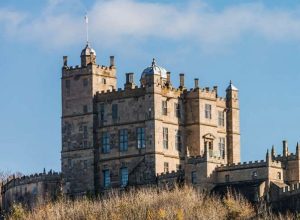
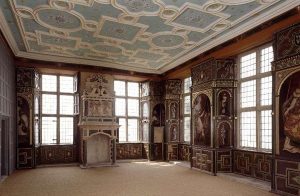
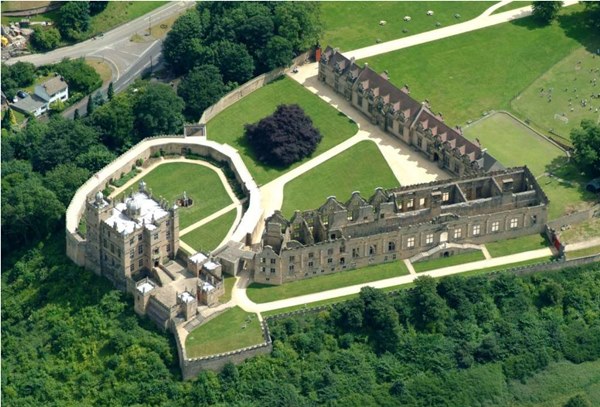
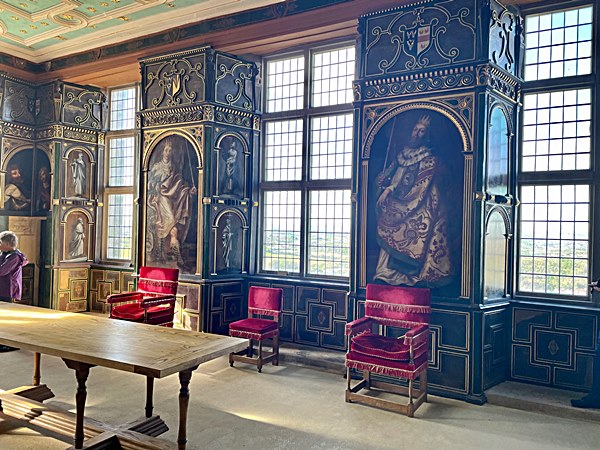
Now run by English Heritage, visitors to the castle can explore the beautifully preserved site and discover its sumptuous and beautifully decorated rooms, magnificent gardens, and the romantic ruins of the former stately rooms.
From magnificent, carved marble fireplaces and majestic painted ceilings to wonder at, to the Fountain Garden and Sir William Cavendish's ground-breaking equestrian school to explore, visitors are taken on a journey back to a bygone era of aristocratic opulence and indulgence.
A second-hand bookshop and welcoming cafe providing delicious sandwiches, cakes, and drinks completes what promises to be a fascinating day out.
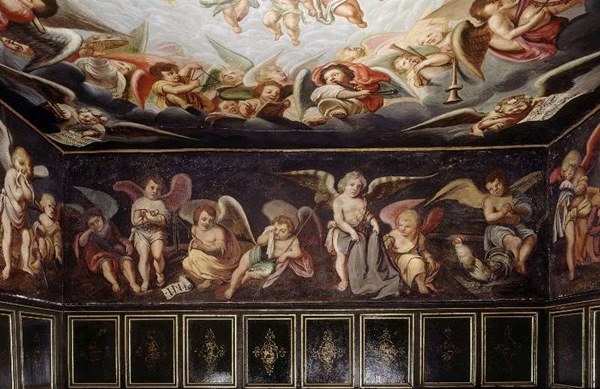
History
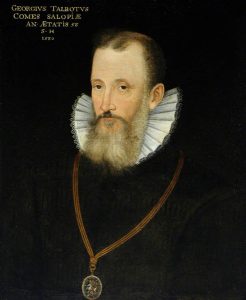
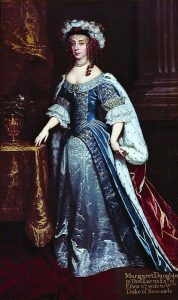
Bolsover Castle was constructed on the site of an ancient burial ground and the remains of an 11th-century fortress built by the famous medieval knight, William Peveril. The original castle had sat as a neglected and dilapidated ruin from the 13th century until it was eventually purchased by aristocrat Sir George Talbot in 1553. Sir George (pictured below) then sold the site to his stepbrother, Sir Charles Cavendish, son of eminent Elizabethan businesswoman Bess of Hardwick.
Sir Charles Cavendish instructed the services of notable architect Robert Smythson, and together with Robert’s son, John, ambitious plans were devised to replace the derelict fortress with a stately, refined, and luxuriant residence. Works commenced on the site in 1612, but unfortunately, Robert Smythson died in 1614, and Sir Charles passed away just three years later before the building was completed. Sir Charles Cavendish is buried in St. Mary Old Church, Bolsover, less than half a mile away from the castle site.
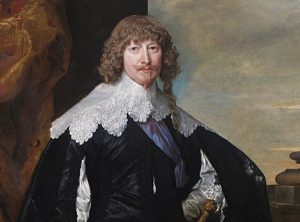
Following the death of Sir Charles, his son, 25-year-old William, who would later become Duke of Newcastle, took on the mantle and continued his father’s project at Bolsover. Working with John Smythson, Sir William remained dedicated to the Bolsover property known as Little Castle, overseeing its development and filling it with elegant furniture and paintings. He and his wife Elizabeth threw lavish parties there for local dignitaries, entertaining them with plays and shows.
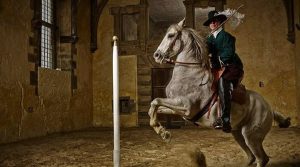
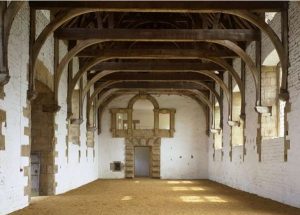
Sir William was a committed and skilled horseman with a particular passion for the art of training and riding horses and the craft of ceremonial dressage. In around 1630, an impressive riding school and equestrian ring were added to the Bolsover grounds, where Sir William fully indulged his passion, training his horses to deftly move around vertical posts and perform sets of controlled movements.
At the declaration of the civil war in 1642, all activity at Bolsover Castle ceased, and the then-49-year-old staunch Royalist, Sir William, loyally fought for King Charles. Against his advice, the 1643 Battle of Marston Moor was fought with significant losses. Sir William's wife, Elizabeth, had also unexpectedly died just two months earlier, and he fled the country, remaining in exile until 1660, returning only after the monarchy was restored.
During the war, the Parliamentarians caused significant damage to William’s beloved Little Castle, and together with his second wife, Margaret, whom he'd met and married during exile in Paris, he set about restoring the estate and gradually returned it to its former glory.
Throughout his life, Sir William wrote a number of plays, poems, and works on horsemanship. He also encouraged and supported his wife, Margaret, in her career as a published poet and writer. Margaret died at Welbeck in December 1673, at just 50 years of age. At the age of 84 and suffering from Parkinson’s disease, Sir William died just a few years later, on Christmas Day in 1676, with all works at Bolsover Castle complete.
Regrettably, William’s son and heir, Henry, failed to show the same dedicated care for Bolsover Castle as his father, dismantling the state apartments and allowing the place to fall into disrepair. Henry Cavendish died in 1691 without a male heir, and the Bolsover estate passed to the Dukes of Portland via the marriage of his daughter. Under the Dukes’ ownership, Little Castle spent most of the 19th century tenanted and used as a vicarage.
In 1945, the Duke of Portland gifted Bolsover Castle to the state. Following the threat of subsidence that had been caused by mining practices at nearby Bolsover Colliery, substantial works were carried out to secure and protect the site. The care and management of the property were taken over by English Heritage in 1984.
Ghostly activity
- Visitors describe hearing the distinct sounds of neighing horses on the grounds of the castle when there are none in the vicinity or surrounding fields. The sounds of clopping horses' hooves are also heard, with some witnesses claiming to see a man sitting astride a horse standing at the castle gates. After a few seconds, the horseman is said to have completely vanished without trace.
- Doors violently swing open and close when there is no wind or anyone near them.
- The figure of a woman in a grey or off-white dress walks through an area of the castle wall that would once have been a doorway. Seconds after appearing, the woman simply vanishes.
- Staff report hearing muffled voices, seeing unexplained lights, and being forcefully pushed.
- One unfortunate member of the staff was locking up the place late one night when she heard a loud, bloodcurdling scream coming from inside the castle. She unlocked the premises and bravely looked for its source, but could find nothing to explain it.
- Visitors looking out onto the landscape that surrounds the castle have described seeing groups of men dressed as civil war soldiers marching purposefully in the direction of the building.
- The ghostly apparition of a woman in a pale blue dress has been seen many times around the castle. It is thought that this figure is possibly that of William Cavendish’s wife, Margaret.
- Construction workers carrying out some necessary repairs at the castle around the time of the COVID lockdown reported seeing the ghost of a man dressed in period costume. Several witnesses saw the figure, which was described as simply evaporating into the ether.
- The ghost of a small boy has been spotted skipping and playing by the fountain in the grounds of the castle. The same figure is said to try and interact with visitors by holding their hands. Is he the same ghostly child who has also been observed sitting on the castle steps?
- Staff tell of hearing loud bangs and crashes in addition to the sounds of pacing footsteps and mournful sobbing when the castle is closed to visitors.
- The unmistakable scent of horses is commonly reported in the riding school area created and used in the 1600’s by passionate dressage equestrian Sir William Cavendish.
- The chilling disembodied sounds of a crying baby and the ghost of a maid or nanny carrying a young child have been reported in the kitchen area.
- The apparition of a woman wearing a Victorian style-black and white dress has been named Mrs. Robbins by staff. It is thought that she could be a former housekeeper who worked at the property in the 19th century, when it was used as a rectory.
- Poltergeist activity is said to be a frequent occurrence at the castle, with objects being moved or thrown by unseen hands.
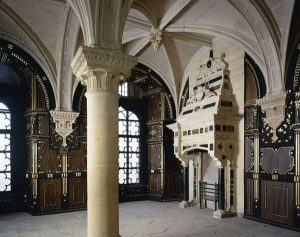
- The ghost of a man that some claim is Sir William Cavendish has been spotted standing by the fireplace in the former dining chamber known as the Pillar Parlour.
Video
Location
-
Castle Street, Bolsover, Chesterfield, Derbyshire S44 6PR, UK
Access
Please note that the Little Castle area is unfortunately not accessible to wheelchair users, but interpretation boards are located in the Riding House.
Terrace Range, Venus Garden, parts of Riding House, and the Stables do have level access with good viewpoints.
Disabled access to some parts of the Riding House and Terrace Range is subject to seasonal changes; please call the castle staff on 01246 822844 in advance of your visit for further details.


Add a review