
Ghosts Across Cultures
- Creepy world
-
Sep 07
- Share post

A human fascination with ghosts and the paranormal crosses not only centuries of time but also continents, with a tapestry of supernatural beliefs that reflect our societal norms and spiritual practices. Influenced by folklore, ritual, and personal experience, the subject of ghosts and how they are perceived gives us fascinating insights into how different cultures view the past, confront death and mortality, and seek to understand those occurrences that seem to defy rational and scientific explanation.
Are ghostly encounters a cultural construct?
Ethnography – the branch of anthropology that scientifically describes specific human cultures and societies – maintains that a belief in ghosts cannot be separated from its cultural foundations. Anthropologists argue that paranormal theories are born out of culturally shaped perceptions of the relationship between the human mind and the world within which it resides. Furthermore, they should be understood within the social and historical contexts of the specific culture concerned.
In their highly respected 2007 examination of the subject, Haunting Experiences: Ghosts in Contemporary Folklore, Goldstein, Grider, and Banks-Thomas explore how accounts of ghosts and hauntings play an important role in society. They conclude that far from providing mere entertainment, stories of the paranormal function as culturally rich expressions of fear, trauma, moral reflection and social tension. They argue that ghostly tales in fact act as a vehicle for expressing fears about such subjects as grief and injustice that ordinarily may not be so easily discussed.
Despite his landmark book The Terror That Comes in the Night (1982) being over 40 years old, David J. Hufford remains one of the most influential voices on this subject. In the book Hufford adopts an “experience-centred approach” and rejects the idea that ghostly experiences can be easily explained as cultural inventions. He maintains that similar mysterious personal encounters are consistently found across the world, spanning different cultures and providing support for the theory that they are a real, albeit misunderstood, phenomenon of human perception. Hufford’s work remains widely cited in both paranormal and neuroscientific research circles.
Explaining the patterns of spiritual beliefs
Across many cultures spiritual explanations are often used as the reason for environmental anomalies, various disasters and personal examples of misfortune and illness. In such cases reliance on explanations that have a supernatural basis can provide a source of acceptance in a world where people feel powerless and events chaotic.
A global ethnographic survey of 114 societies discovered that more than 90% used supernatural forces to explain personal afflictions, natural disasters and crop failures. To a lesser degree such forces were also thought to explain wars and conflicts, with many sharing the view that neglected spiritual practices or family disharmony were behind the calamities.
In China, the Hungry Ghost Festival, which takes place in the seventh lunar month, is a time when the dead are believed to roam freely among the living. Families leave food and incense as offerings to wandering spirits—not just to honour the departed, but to pacify and thereby prevent spiritual unrest.
Such practices show how spiritual philosophies serve to explain and understand misfortune and maintain a sort of moral order where the living remain bound by obligation and reverence to those that have departed.

Ghosts as reminders of the unresolved
In “Speaking with Revenants: Haunting and the Ethnographic Enterprise”, scholar Katie Kilroy-Marac draws on French philosopher Jacques Derrida’s 1993 concept of hauntology—the idea that ghosts act as reminders of what has been left unresolved. Derrida opines that something can be neither fully present nor absent. Dead nor alive. He did not consider ghosts to be spiritual apparitions but a spectral concept of something that lingers from the past, disrupting the present. Kilroy-Marac argues for the importance of the academic task of “chasing after ghosts” and giving them credence as social figures out of a concern for justice and responsibility in the past, present and future.
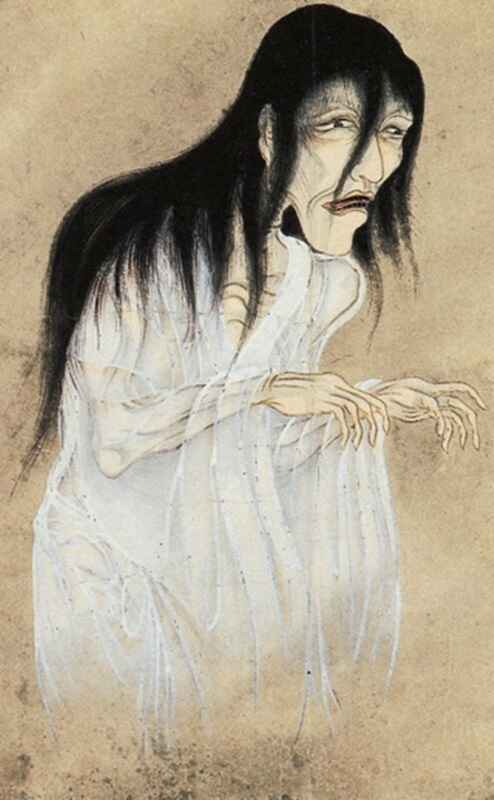
In Japanese folklore, yūrei—women who died with deep sorrow or rage—are said to often manifest as vengeful spirits (onryō) seeking redress. They haunt not only houses but also memories and emotional debts. These apparitions, common in Edo-period literature and modern films like The Ring, which was based on the original 1998 Japanese film Ringu, are not just horror tropes—they are emotional revenants from a non-linear past.
In Russian traditions, it is believed that the soul (dusha) lingers for 40 days after death and may revisit loved ones or places that once had significance. Slavic folklore also speaks of domovoi (house spirits) and mertvets (the dead), whose presence signals that something has been left undone.
In such cultures ghosts may appear as warnings, bringing messages from the past, calling upon the living to remember, repair, and reconcile — thereby blurring the line between time, space, and memory.
Spirits in context: Ghosts across the world
Ghosts vary dramatically across cultural settings—not just in form, but in function:
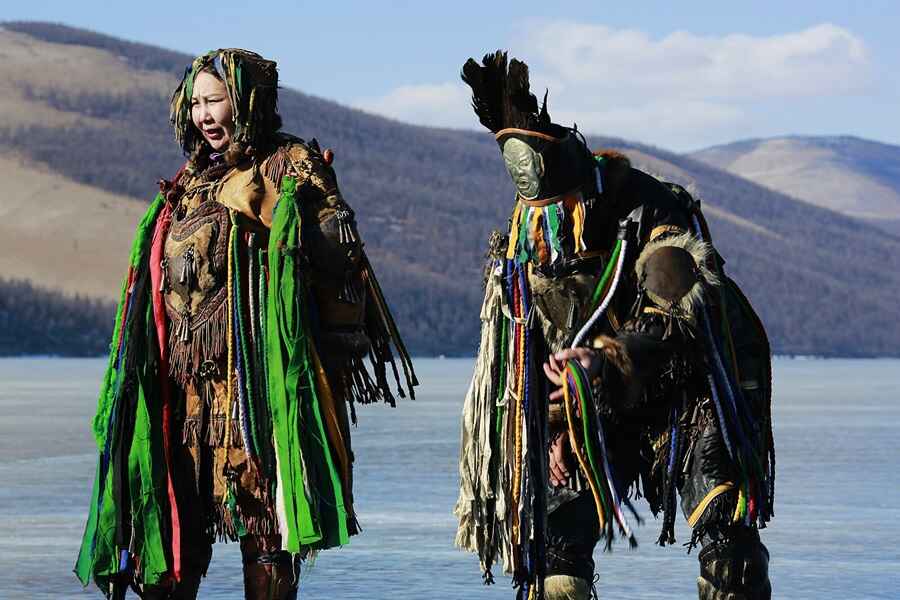
Mongolia: Anthropologist Grégory Delaplace describes ghost encounters as tied to land, kinship, and ritual. Spirits may return when burial rites are incomplete or sacred boundaries are crossed.
In Mexican traditions during Día de los Muertos (The Day of the Dead), the dead are not feared but are celebrated as part of the family. They are lovingly welcomed back into the home to be honoured with food, flowers, and music.
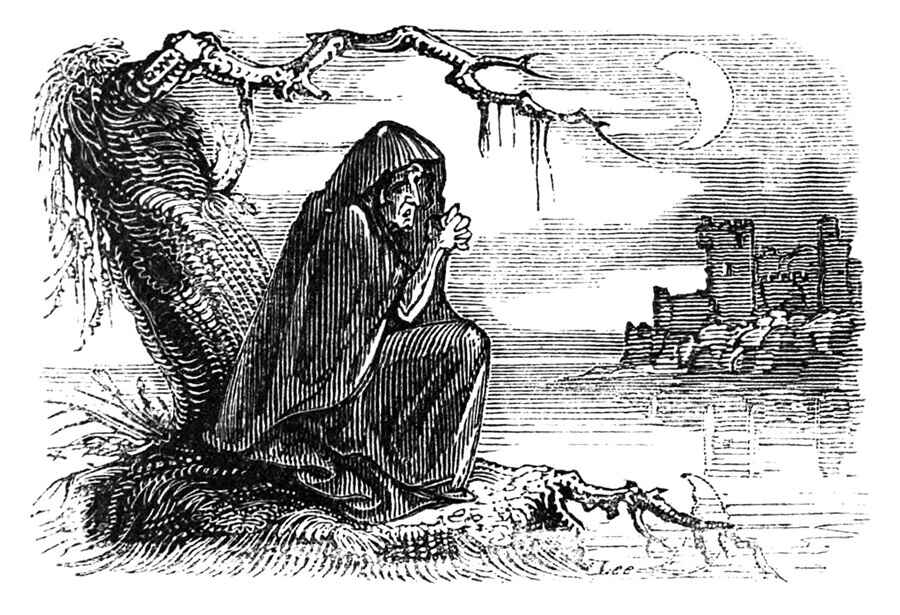
In the Celtic traditions of Ireland and Scotland, the banshee foretells death with her mournful and wailing cries. Those having encounters with ghosts and said to have “second sight” are celebrated and revered, not feared or ridiculed.
In Zulu cosmology the amadlozi, or ancestral spirits, are invoked to provide guidance, protection and healing. Tradition holds that anyone neglecting or offending such spirits risks illness or misfortune being visited upon them. Not as a punishment but as a reminder to restore moral and ritual balance.
In Chinese beliefs not all visiting spirits are seen as kind and well-meaning, as Gui, or restless ghosts, are thought to result from violent death or improper burials. Taoist priests or Buddhist monks are often required to pacify or exorcise them completely.
These examples show that ghosts are not simply something to fear. They are viewed and respected as moral agents, ancestral messengers, and spiritual symbols.
When research becomes personal
Interestingly, many researchers claim to have had their own unexplained and disturbing experiences while carrying out fieldwork on the subject of ghosts and the paranormal.
One anthropologist, identified only as G.D., recounted two unsettling moments during fieldwork in both Mongolia and the UK. She explains that in Mongolia a bell inexplicably rang in a locked and empty room on the Mongolian steppe. On another occasion in the UK, she described waking in the night to find a heavy presence on her chest, with a shadowy, spectral figure standing in the doorway. Though she avidly searched for rational justifications, she was unable to find satisfactory explanations for either of these eerie occurrences.
Such experiences appear throughout Being Changed: The Anthropology of Extraordinary Experience, a collection of firsthand accounts by academics who encountered dreams, visions, and ghostly presences they could not fully explain. In such moments or personal encounters that defy rationale, belief inevitably becomes strengthened—and the lines between observer and participant are unavoidably blurred.
So, do ghosts cross cultures?
When asking the question of whether ghosts are to be found in every culture across the globe, it seems that virtually all have some kind of belief in the existence of the supernatural. A genuine belief in ghosts and hauntings acts to mitigate the enduring pangs of uncertainty as to whether there is more to life than we already know. While the form ghosts take may differ, it seems that a belief in an afterlife fills a universal and cross-cultural human need to search for comfort and understanding when confronting the inevitability of our own deaths.