
- Get directions
- Call now
- Bookmark
- Share
- Website
- Send an email
- prev
- next
In brief
Once visited by John Lennon and Paul McCartney, the stunning Old Bell on Derby’s ancient Sadler Gate is a ghost hunter's paradise. The beautiful 17th-century coaching inn positively bursts with character and history, with every room speaking whispers of the past and reports of hauntings spanning generations.
Category
About
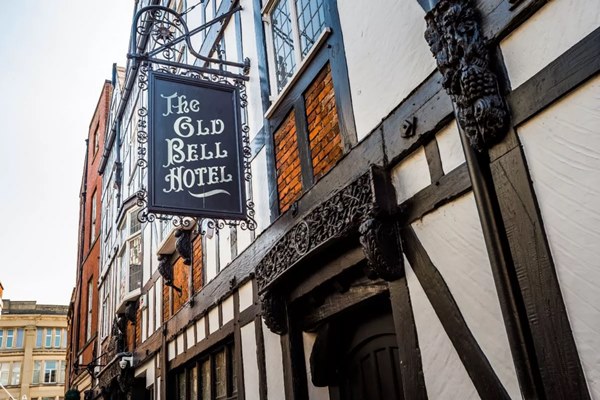
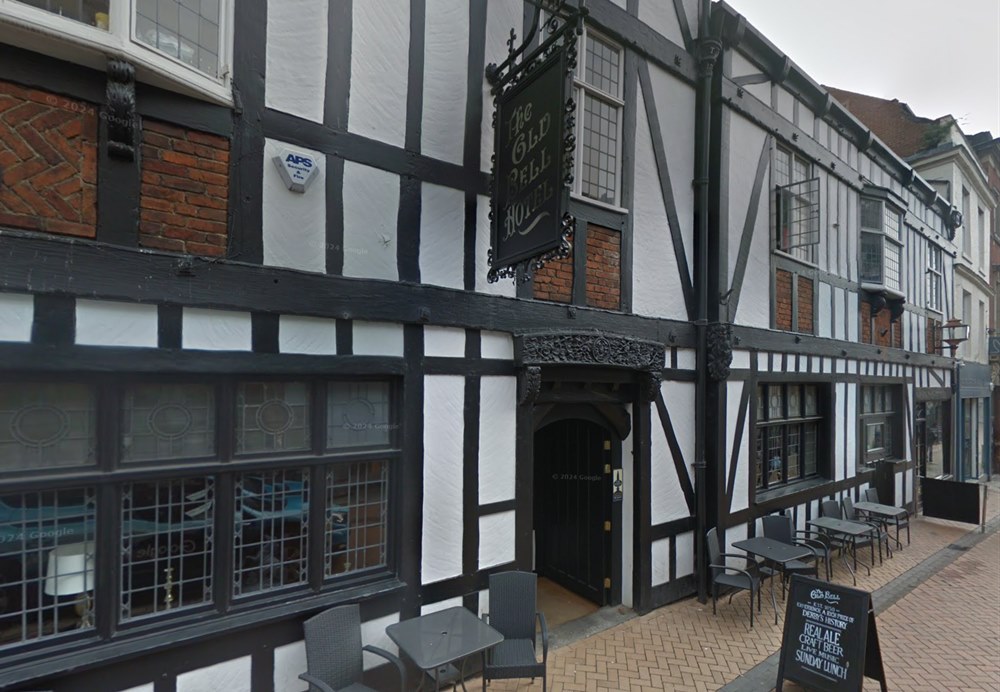
The gorgeous Old Bell in central Derby provides a truly unsurpassed experience for history and paranormal buffs alike. With a past stretching back over 370 years and retaining a wealth of original features, this beautiful and iconic coaching inn is the largest and last remaining of its kind in the city. Securing its place as one of the country’s most beloved historical landmarks, the Old Bell is as famous for its ghostly activity as it is for its breathtaking heritage.
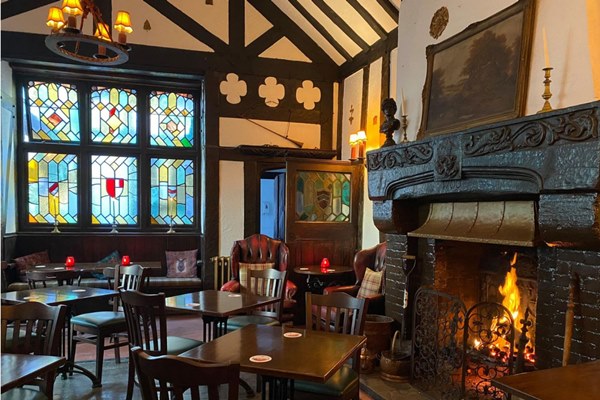
In 2012, after years of neglect, The Old Bell was rescued and lovingly restored by investor Paul Hurst. Under his expert guidance and working together with English Heritage, the Grade II listed building underwent a captivating and award-winning transformation, with over £1 million invested in a dedicated three-year restoration project. The magnificent outcome is a flawless blend of historical charm and modern-day comfort, crafted by sympathetically renovated rooms that perfectly preserve the building’s traditional character while providing a relaxed warmth and inviting contemporary atmosphere.
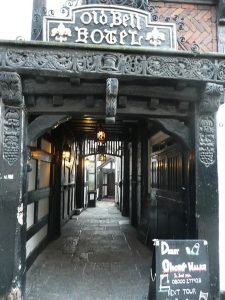
A range of beautifully refurbished function rooms with their own bars are available for hire and include the prestigious Regency Room, complete with glass domes and elegant chandeliers that provide a refined and sophisticated space for guests to enjoy.
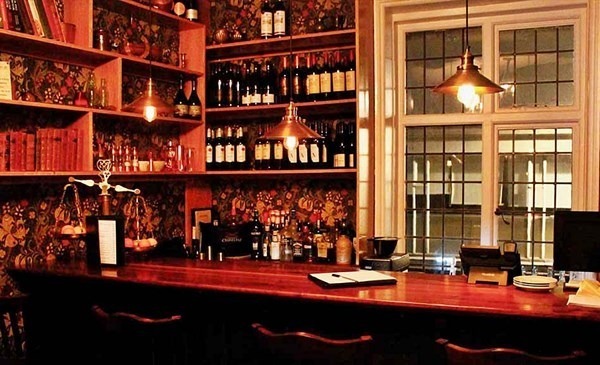
No longer a hotel with accommodation the Old Bell offers something for all tastes with an extensive range of traditional ales, alongside the city’s largest whisky selection, craft beers, speciality lagers, and ciders. For those seeking a teetotal experience, a pot of tea is always available. For parties of 30 or more attending pre-booked events a range of menu options are available.
With weddings, corporate events, live music, and stand-up comedy, as well as thrilling ghost tours, the Old Bell is now one of Derby’s most vibrant and popular hubs for food, drinks, and entertainment. Guests on the ghost tours climb the perfectly preserved Jacobean staircase en route to the original 17th-century attic rooms, which are the scene of many gruesome past events and ghost sightings.
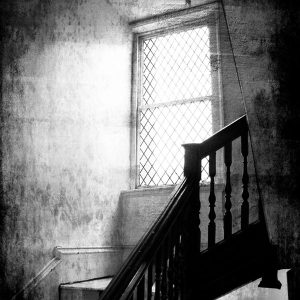
Providing the perfect destination, the irreplaceable Old Bell promises an unforgettable experience for any dedicated ghost searcher.
History
The Old Bell Hotel started life in the mid-seventeenth century when the prominent and influential Meynalls, a family of wealthy landowners, authorised the building of a county town coaching inn on Sadler Gate. Dating back over a millennium and one of Derby’s oldest streets, historic Sadler Gate takes its name from the saddlery trade that once dominated the area. Modernised shopfronts now house the city’s bars, coffee houses, and independent shops, concealing authentic and untouched structures where 17th-century leather workers, blacksmiths, bootmakers, and other tavern keepers once plied their trade.
Quickly taking its place in the heart of Derby’s bustling Cathedral Quarter, the Old Bell became a central stop and lifeblood for stagecoaches travelling varying routes across the country. Weary travellers on long trips would stop off at the hotel to enjoy rest and refreshments and to change horses. The historic courtyard, lantern-lit alleyway, and remnants of surviving stables give today’s visitors a fascinating glimpse of a bygone era, back to a time when coaching inn courtyards were a constant and noisy hub of activity.
With its position as a transport junction and central communication point, the Old Bell played a significant and adaptable role, expanding its functions into a doctor’s surgery and busy mail centre, with couriers delivering letters and goods from all over the world. The building was also once used as a courtroom, with its cellars employed as prison cells. Surviving secret tunnels and passageways that run under the hotel building and connect to other parts of the city suggest other possible and mysterious purposes.
The Old Bell flourished and became the place to be, where people flocked to enjoy drinking, dining, and entertainment. The hotel swelled to more than fifty rooms, seven bars, and restaurants serving as a nexus for hospitality, social gatherings, travel, and pleasure. A mechanical bell system was installed to allow guests to summon hotel maids to attend to their needs. The original and perfectly preserved service bells can still be seen on display at the Old Bell.
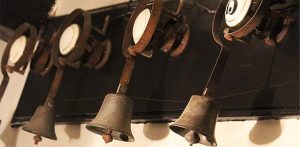
Original room numbers are also still in place, providing a captivating link to the building’s amazing past.
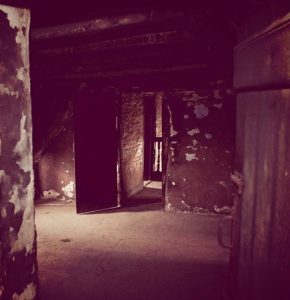
The hotel’s fantastic original and untouched attic rooms transport visitors back to a period three hundred years earlier when they were used to accommodate poorer and more disorderly guests. Drenched with a moody and somewhat sinister ambience, the unsurprisingly haunted attic rooms are the scene of many of the hotel’s more violent and allegedly murderous past chapters.
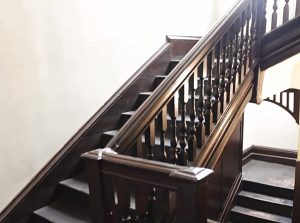
During the 1745 Jacobite uprising, Bonnie Prince Charlie and his troops took shelter at the upper and attic floors of the Old Bell on their journey to London. To reach their resting places, the soldiers would have climbed the building’s magnificent Jacobean staircase, one of the few beautifully existing and unspoilt examples of its kind that remain today. What a history!
Moving closer to more recent times, the building was refurbished in 1929 with mock-Tudor timbering sourced from other local buildings and added to its façade.
Having long been a place of music, with concerts held in the ornate ballroom as early as 1775, this iconic building became a firm favourite with many well-known musicians, with visits from Paul McCartney and John Lennon. Live music today forms a large part of the Old Bell’s line-up of entertainment. After its multi-award-winning restoration in 2013, the Old Bell remains a building of enormous architectural, historical, and cultural significance. Its continued relevance as a venue for social events, entertainment, and a preserved heritage site ensures that it will remain a cherished part of Derby for generations to come.
Ghostly activity
- Many of the ghost sightings that have been reported at the Old Bell occur in the infamous Room 29, which is in the attic. It is said that centuries ago a linen maid named Mabel who worked at the Old Bell was either murdered in the room or hanged herself there after discovering that the father of her unborn child had been killed at war. It is unclear as to the source of these claims, but the story of tragic Mabel appears to have spanned generations, and the figure of a ghostly woman in Room 29 has been reported many times.
- The ghost of a serving girl dressed in old-fashioned clothing and a white cap has been seen many times on the first floor. She is said to be more likely to appear in the presence of children. Is this tragic Mabel or another quite separate soul who walks the floors of this historic old hostelry?
- In the 1950s a landlady was in one of the upstairs rooms changing the nappy of her baby. As she turned to reach for something, she looked back to find the figure of a woman, described as wearing an 18th-century style dress, stooping over her child. As the woman went to grab her baby, the ghostly figure simply vanished. Who is this maternal spirit who appears to watch over children at the Old Bell?
- An earlier sighting of the motherly spirit was reported in the 1930s and concerns a former landlord who had an asthmatic son. Upon hearing the child coughing and struggling to breathe, the landlord rushed to his upper floor bedroom. Upon entering the room, he was aghast to find a ghostly woman dressed in an old-style dress bending over the child in what appeared to be an effort to help him. As he advanced into the room, the mysterious figure simply melted away.
- A decorator was once commissioned to paint the bar area after closing and everyone had left for the night. As he set to work laying down sheets to protect the floors, he got the shock of his life when he looked up to see the figure of a woman dressed in an old-fashioned cream blouse and red and white striped apron staring back at him from the mirrored back bar. He described the figure as moving to the left before disappearing altogether.
- Staff describe strange sensations and feelings of being watched in the accounts office, which was once the room of a man named Walter Walters. After staying for several weeks, Walter had been found dead in his room after refusing to pay his bill. It seems unclear whether Walter was murdered or had taken his own life.
- The spirit of a soldier said to be of a nasty disposition is reported to haunt the top floor of the inn.
- Staff have experienced poltergeist activity with napkins and cutlery laid out on tables only to be later found to have been rearranged by unseen hands.
- When the Old Bell still operated as a hotel, guests often found that clothes they had left in disarray would later be discovered neatly folded and placed at the bottom of the bed.
- The ghost of a woman wearing a hat and Victorian dress once appeared in front of a bartender and customers in the Tudor Bar when it was still a gentleman’s club. The figure, which was described as quite grey and transparent by the many astonished witnesses, walked across the room before disappearing.
Video
Location
-
51 Sadler Gate, Derby DE1 3NQ, UK
Access
Please note that while the ground floor is accessible to wheelchair users and customers with restricted mobility, there is a step down into the bar, and assistance may be needed. Please contact the staff team at 01332-723090 for further details.
Region
A full record of any articles, websites, webpages, books, or other materials that have assisted us in the research and presentation of this listing can be found below.
- https://bellhotelderby.co.uk
P.Vicky (2024) ‘The Historic Core of Derby.’ April 2nd Country Images Magazine. Available at: https://www.countryimagesmagazine.co.uk/featured/the-historic-core-of-derby/
Rippon. N (2017) ‘Sadler Gate's past is every bit as colourful and vibrant as its present.’ 7th August, Derby Telegraph. Available at: https://www.derbytelegraph.co.uk/news/nostalgia/sadler-gates-past-every-bit-242227
Hardy.R (undated) ‘The Ghost of the Old Bell Hotel.’ Available at: http://www.twistedtree.org.uk/ghost.htm
Richard Felix (2023) Most Haunted Places in Derby. 3rd June. Available at: https://www.youtube.com/watch?v=aWn4_Ho-wD4&t=2502s
The appropriate copyright attributions for any images and videos included in this listing can be found below.
Apart from that listed below the images of the interior and exterior of the Old Bell Hotel and the video used on this page are provided with permission of https://bellhotelderby.co.uk. All rights reserved. The video can also be viewed here https://www.youtube.com/watch?v=AiSGCIELdzU
The Old Bell Hotel.’ Created by Tom Reading 2009. Licensed under CC BY 2.0 via Flickr. The Old Bell Hotel | The Bell Inn, Sadler Gate, Derby | Reading Tom | Flickr
Add a review