
- Get directions
- Call now
- Bookmark
- Share
- Website
- Send an email
- prev
- next
In brief
If stone walls carry the ghostly vestiges of the beings who died a violent death within them, then with at least 50 brave and hard-working souls sacrificed during its remarkable construction, it comes as no surprise to learn of the plentiful supply of paranormal phenomena reported at the Standedge Tunnel network.
Category
About
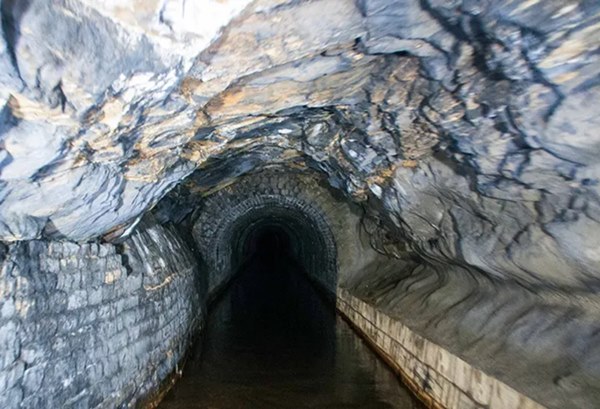
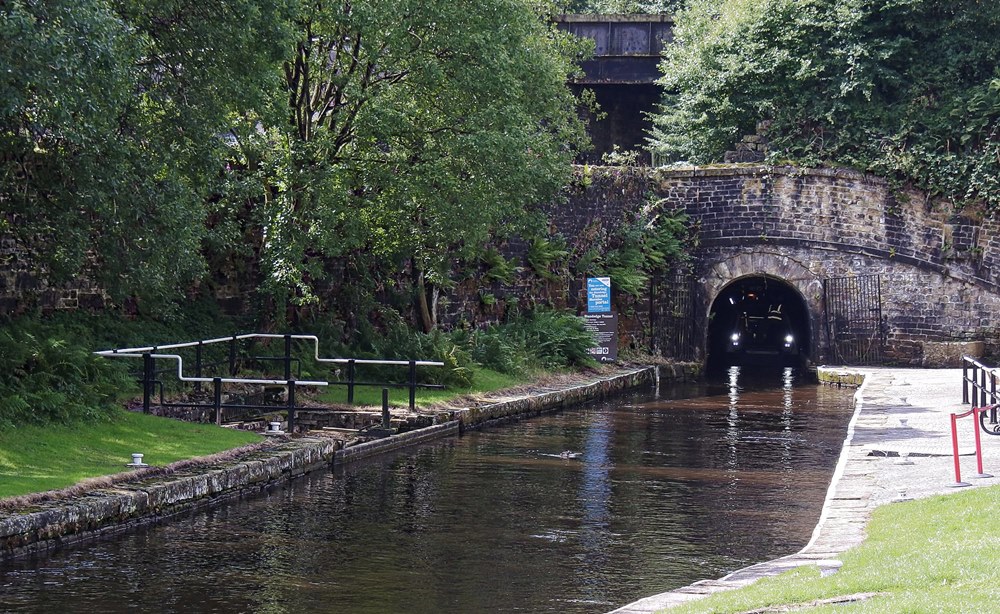
Built to provide an efficient, fast, and straightforward route to transport goods and situated on the Huddersfield Narrow Canal, the Standedge Tunnel network stretches from Marsden in West Yorkshire to Diggle in Greater Manchester. It is the longest, highest, and deepest canal tunnel in Britain.
Standedge is comprised of a total of four interconnected tunnels, one of which includes a railway tunnel that remains in use to this day. In addition to the canal tunnel, there are two eerie, disused railway tunnels that each run for over three miles.
All four of the tunnels are interlinked by a network of smaller passageways called adits. Adits are underground, horizontal corridors or passages that lead into an excavation for the purposes of providing pedestrian access.
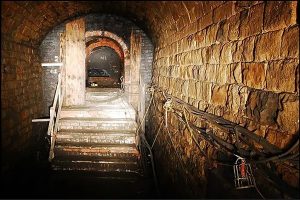
Following the rise in popularity of railway transportation, the tunnels closed in 1944, gradually falling into disrepair. They remained unused until their fortunes changed in 1974, when the Huddersfield Canal Society was set up with the aim of restoring the canal.
Work started to repair and restore the tunnels in 1981, but throughout the 1980s, rumours grew that the underground passages were being used for occult ceremonies and Satanic rituals, with workmen discovering sheep and chicken heads and strange symbols drawn onto the walls.
As the local police increased their presence at the site, any talk of nefarious practices thankfully diminished, and after a 20-year project of full restoration, Standedge Tunnel reopened in May 2001.
Now a popular family-friendly tourist attraction with a visitor centre, exhibitions, and a children's play area, explorers can learn all about the construction of the tunnels, the history of freight transportation, and about some of the people who were involved in this incredible waterway achievement.
With canal-side seating and being surrounded by the lovely Yorkshire countryside, visitors can enjoy tasty meals and drinks using locally sourced ingredients in the dog-friendly Watersedge café. The café itself is housed in the pretty cottage and former home of traffic regulator Thomas Bourne, who was first appointed to the role in 1811 at the age of just 12. Thomas checked on the boats four times a day until 1848, for a total of 37 years of his working life.
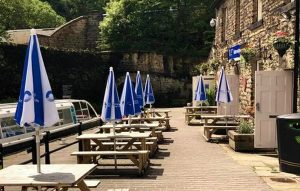
Boat trips are available (for a charge), during which engaging guides will inform and entertain visitors with their tremendous knowledge and facts about this exceptional engineering accomplishment and provide a unique and original experience of how boat travellers would have journeyed through the tunnels in the 19th century.
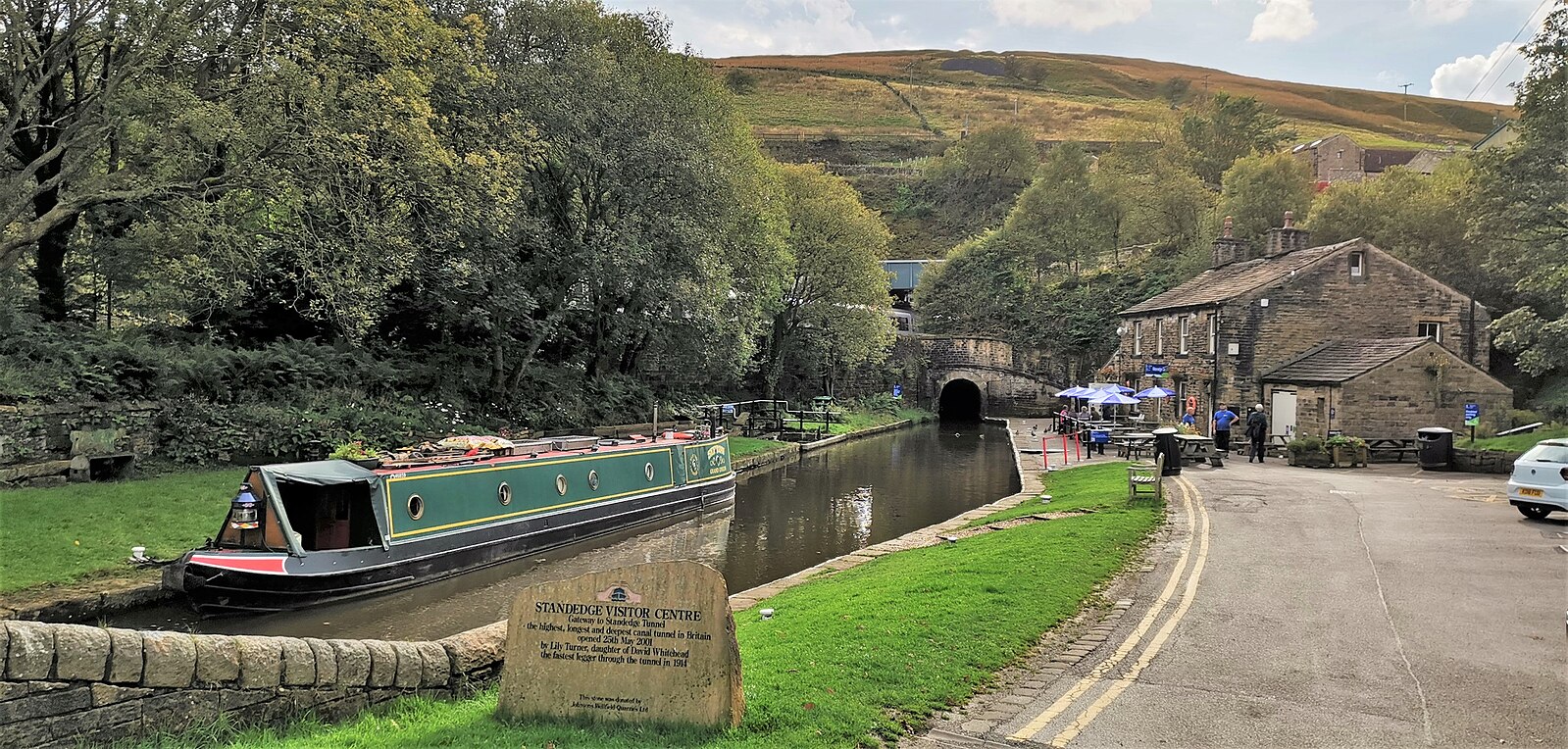
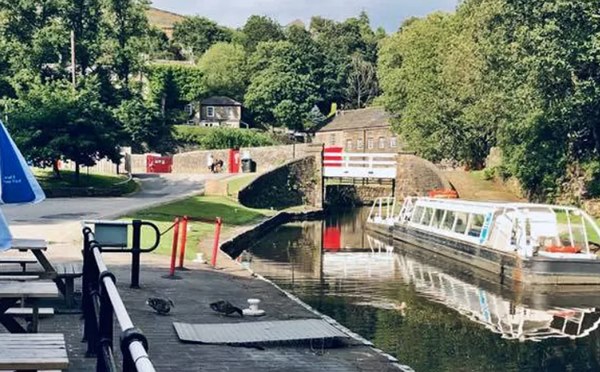
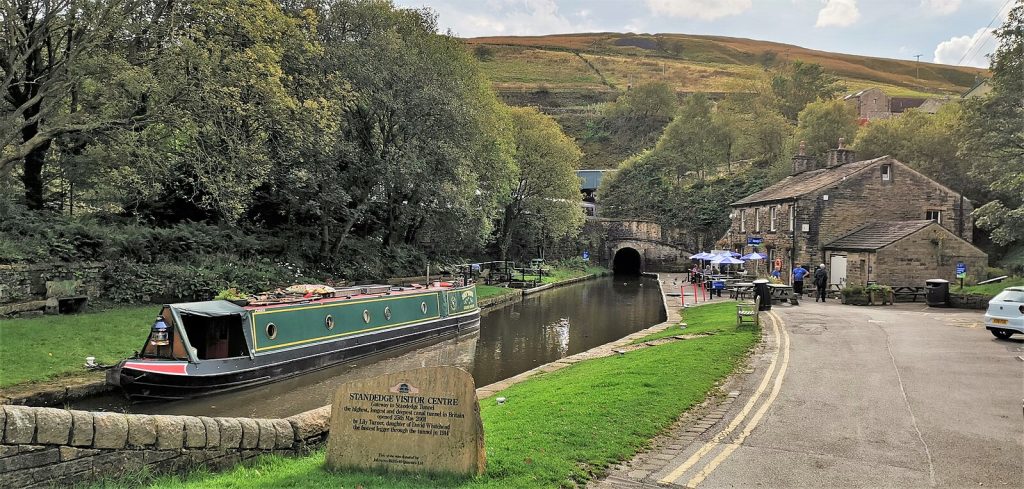
History
Work commenced in 1794, and the original designer of the tunnel network was acclaimed Derbyshire canal and railway engineer Benjamin Outram. However, opposition to his plans to use only two construction headings to avoid the expense of sinking deep vertical shafts and criticisms that this would severely extend the completion date caused him to resign from the project in 1801. Benjamin Outram had also been plagued with health problems throughout the brief and died of a stroke in 1805 while on his way to a business meeting at the age of just 41.
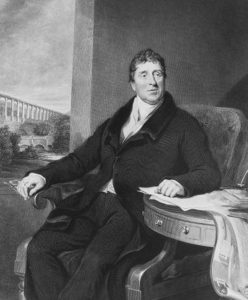
Six years after Outram’s withdrawal and construction had been halted, additional funding was secured, and esteemed civil engineer Thomas Telford (below) was brought in and produced plans, which led to completion and a grand opening in April 1811.
Taking 17 years to complete, it is estimated that the breathtaking engineering feat that is the Standedge Tunnel network took the sweat and labour of around 2,500 men. Working in brutal conditions day and night and using the most rudimentary tools of pickaxes, shovels, and gunpowder to dig out the underground passages, the death count proved a costly sacrifice.
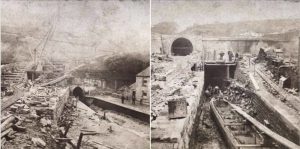
Official figures claim that a total of 50 men were killed during the work, but the true number of lives lost is thought to be far greater. Many casualties who were injured on site but later died in the hospital or at home are unlikely to be included in the official number. Workers were killed when excavated holes were packed with explosives, but the safe perimeter had not been properly calculated. Working in the pitch black with the only light provided by a candle glued with wax to their hats, many workers even walked around with gun powder in their pockets.
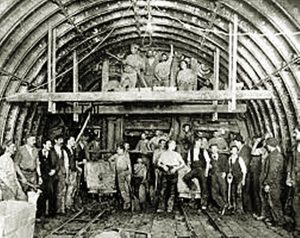
Even after completion, the tunnels and canal continued to claim many victims. In 1857, two-year-old Mary Ann Taylor was playing near the canal when she was crushed between the beam of Low Lock Gate and the wall. In September 1910, the body of electrician Richard Clegg was discovered in pieces after he had been hit by a train after going into the tunnels to examine electric wires.
Tragic railway signal linesman Ellis Brewer was killed on his 54th birthday in May 1938. Discovered by his assistant, it appeared that Mr. Brewer had been killed instantly after sustaining serious head injuries when he was knocked to the ground by a train of empty coaches.
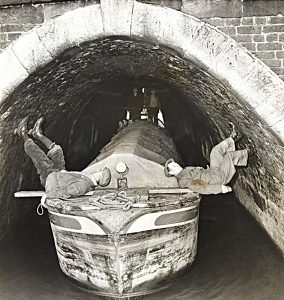
Standedge was constructed without a towpath, and boats could only be driven through the tunnels by using a system commonly used in the 1800s known as legging. This needed two people to lie across a plank on the front part of the boat and steer its progression by pushing against the tunnel wall with their feet. This exhausting operation was fraught with danger as both men had to be at the same angle and applying the same pressure. Many leggers were crushed to death between the barge and the wall if one partner applied too much pressure or his footing slipped against the damp tunnel walls. The image below shows just how vulnerable and unprotected the leggers were.
As railways became a speedier and more preferred method of transporting commercial goods, the Standedge Tunnel fell out of favour, and many canal transport companies went out of business. The last working barge passed through the tunnel in 1921, and the canal and tunnel officially closed in 1944.
Ghostly activity
Explorers who have visited the tunnels have reported many eerie and unexplained occurrences, including;
- The disembodied sounds of men in conversation.
- Echoing footsteps and stones being thrown.
- The smell of tobacco and the sounds of coughing.
- The sounds of digging and a shovel hitting dirt.
- The batteries of fully charged cameras and mobile phones are suddenly and mysteriously drained.
- A ghostly, robed figure has been reported prowling through the tunnels.
- The sudden appearance of strange lights.
- A group of people described being chased out of the tunnel by a terrifying figure wearing a mask. Could this be someone trying to keep the curious away when the tunnels were known to have been used by Satanist groups?
- There appear to be various claims that the tunnel is also haunted by the spirit of a murdered girl named Matilda Crowther whose body was found at the site in 1836 (the date also given is sometimes 1935). However, we are unable to find any records around either date to support this alleged gruesome event or to confirm the existence of a Mathilda or Matilda Crowther in this area.
Location
-
Waterfall Cottages, Marsden, Huddersfield HD7 6NQ, UK
Access
Standedge Tunnel boat trips are fully accessible for wheelchair users, although there is only space for one wheelchair on each trip. The visitor centre and cafe are also reached via a ramp and therefore are also accessible for wheelchair users or visitors with limited mobility.
Please note that the Sat Nav postcode for the carpark, which has spaces for use by disabled users, is HD7 6DH.


Add a review