So, why would a nun haunt a Georgian hotel?
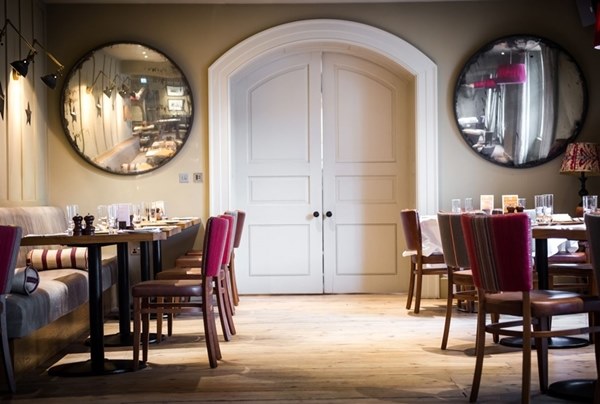
Brimming with charm, a captivating history, and offering guests and visitors pure comfort and a touch of luxury, the beautiful Georgian Grosvenor Arms in Shaftesbury, Dorset, enjoys an abundance of paranormal activity. As described in our listings page, two of the building’s most reported apparitions are that of a hooded monk and a nun dressed in a simple grey habit. So, a reasonable question for any sceptic or serious paranormal explorer would be, why would two such religious figures haunt a Georgian hotel?
We decided to look into this a little further.
Shaftesbury Abbey
Just a two-minute walk from the lovely Grosvenor Arms Hotel are the remains of Shaftesbury Abbey. The abbey, which was founded by Albert the Great in 888, was the first-ever women-only nunnery.
Edward the Martyr
The abbey housed the tomb of Saxon King Edward. Edward had ruled England for just three years when, in the year 978, he was tragically murdered at Corfe Castle in the Purbeck Hills of Dorset. Edward’s killing was said to have been on the orders of his cruel stepmother, who wanted her own son, Ethelred, to be crowned king. Poor King Edward, who was only 16 years old at the time of his murder, became known as Edward the Martyr. He was viewed as the embodiment of an innocent and heroic victim who was betrayed and sacrificed to sinfully advance the status of others. Edward was officially canonised in 1008, and his elevation and recognition as a saint were generated due to the many miracles and healings that were said to take place at his tomb in the abbey. A cult developed, and for centuries the abbey became a hallowed site for thousands of pilgrims who travelled from all over the country to worship at Edward’s shrine.
The coffers of Shaftesbury Abbey, which already enjoyed generous dowries from the large number of its resident nuns who came from successful and distinguished families, greatly prospered as the site of one of the most significant holy shrines in England, with many Saxon kings also gifting land to the nunnery.
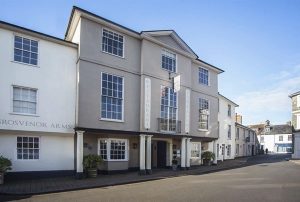
As a celebrated and sacred religious destination, the abbey was central to the area’s economic success, and by the 14th century, Shaftesbury was the wealthiest town in the whole of Dorset. The High Street on which the now Grosvenor Arms is situated (as pictured above today) was awash with inns that all enjoyed a booming trade given their proximity to the abbey and shrine. Although the present building mostly dates to the Georgian era, The Grosvenor Arms is built on the site of a medieval inn with much of its structure comprised of the original framework. The central position of the earliest hostelry which now houses the Grosvenor would have ensured a prominent role in the provision of accommodation, refreshments and stabling for the huge numbers of pilgrims and their horses that flocked to the town.
The end of Shaftesbury Abbey
Shaftesbury Abbey stood as a place of worship and religious obedience for nuns for over 600 years, until it was seized by King Henry VIII during the Reformation of Tudor England. Following the King’s break with Rome in 1534 all religious houses, their lands and capital were confiscated under the policy that became known as the Dissolution of the Monasteries. St. Edward’s tomb was hurriedly removed and hidden in the church. After centuries of concealment, St Edward the Martyr’s post-Reformation resting place was discovered. On 15th September 1984, after forensic examination, the tragic king’s remains were again enshrined in a formal ceremony at the St. Edward the Martyr Orthodox Church in Brookwood, Surrey, where they remain today.
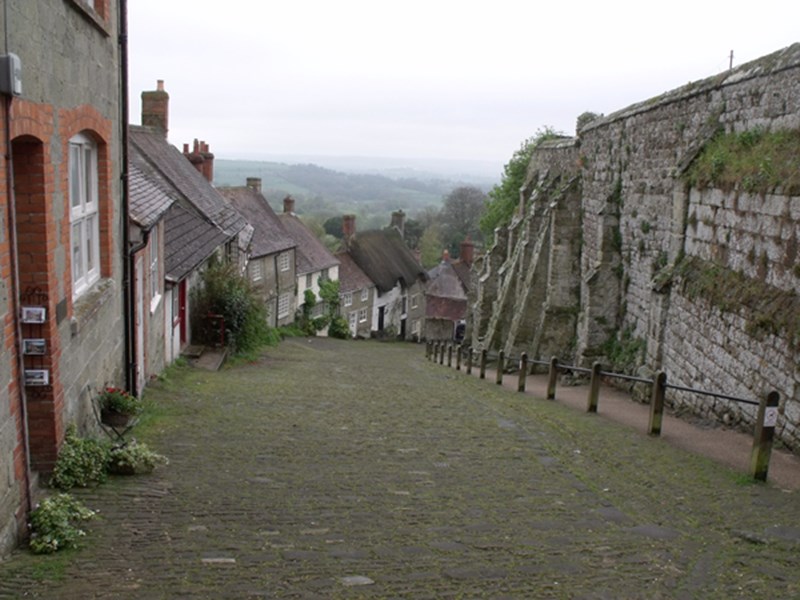
After its closure in 1539, the beautiful Shaftesbury Abbey, which had once dominated the town and was so pivotal to its prosperity, gradually fell into dilapidation and ruin. Only its foundations now remain, with a striking section of the abbey wall still visible on Gold Hill (as pictured below).