
Haunted Shepton Mallet Prison : In the Spotlight
- Hauntings
- Investigation
-
Feb 24
- Share post
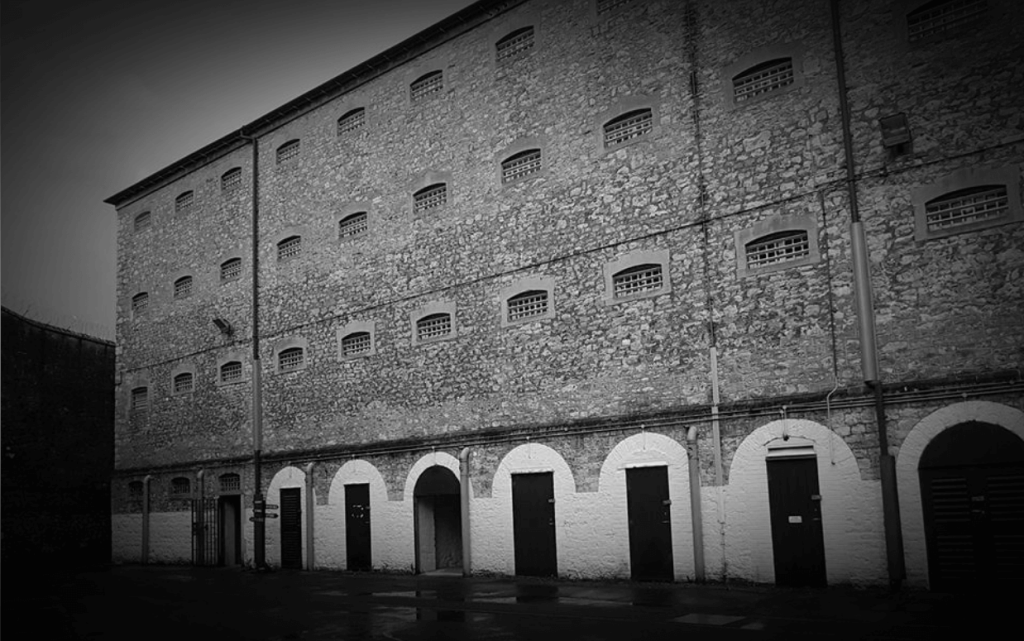
There are buildings that outlive their purpose. And then there are those that seem unwilling to let it go.
Rising in sombre stone from the Somerset market town that shares its name, Shepton Mallet Prison has stood since 1625 — a brooding witness to rebellion, reform, execution and endurance. Today it operates as a fascinating museum and visitor attraction. Yet for many who pass through its heavy doors, the past feels less like history and more like an unrelenting presence.
Here at Ghostly Postcodes, we are thrilled to feature this remarkable former penitentiary on our directory as one of the UK’s most compelling haunted heritage sites — a place where documented history and persistent paranormal activity coexist and are palpably felt.
From disembodied voices and the faint scent of sweet perfume to eerie whistling in empty corridors and the reported figure of a young soldier, this formidable 17th-century prison is essential visiting for the serious ghost enthusiast.
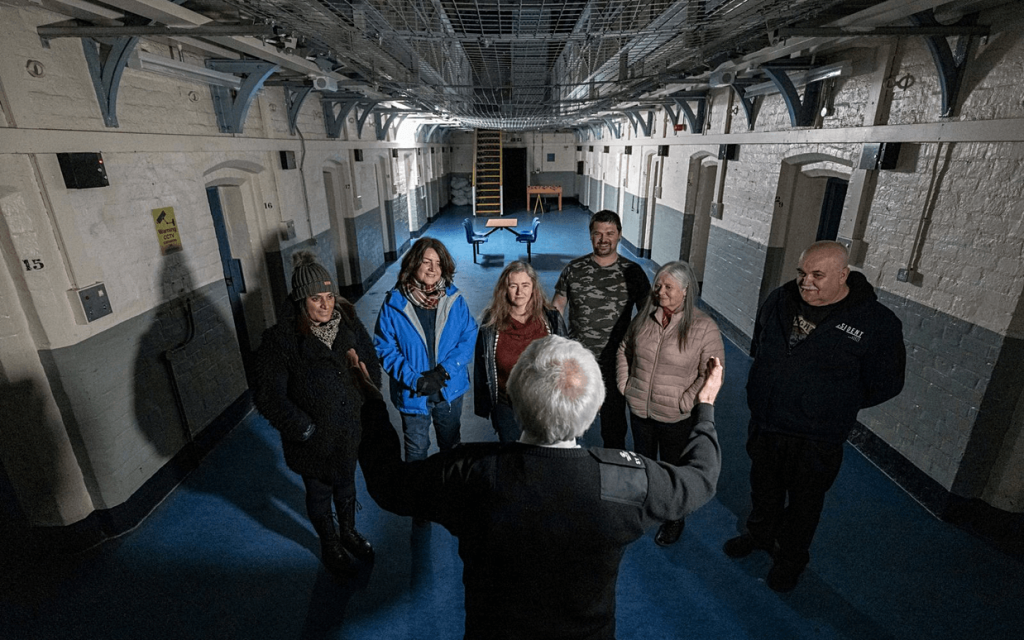
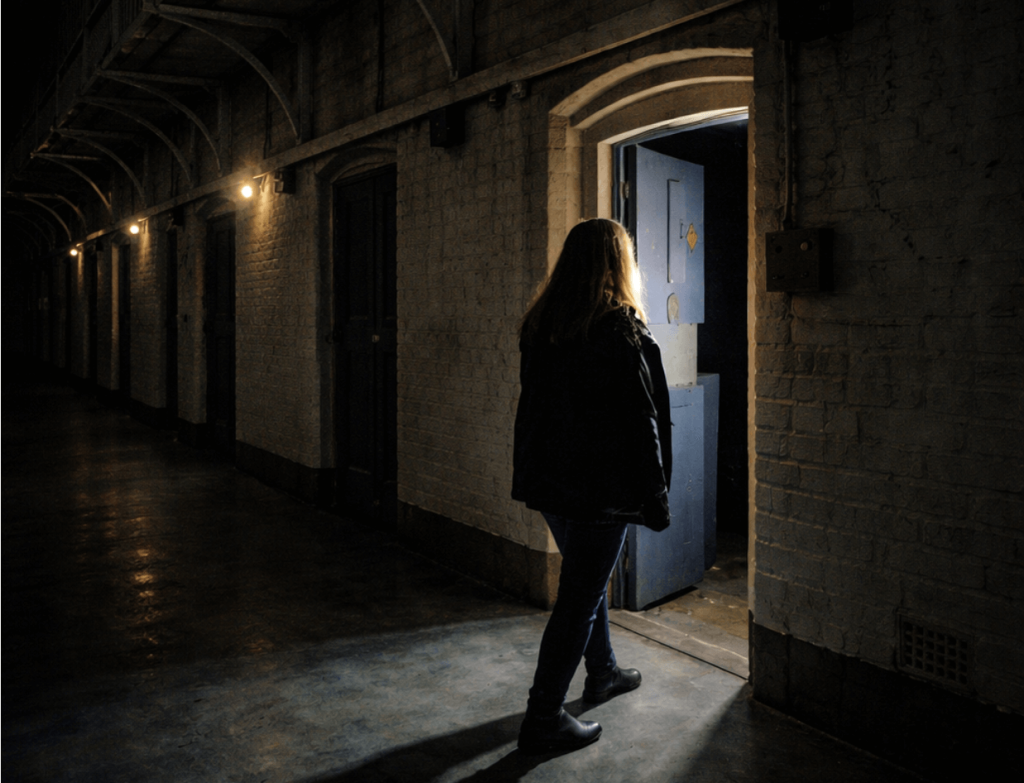
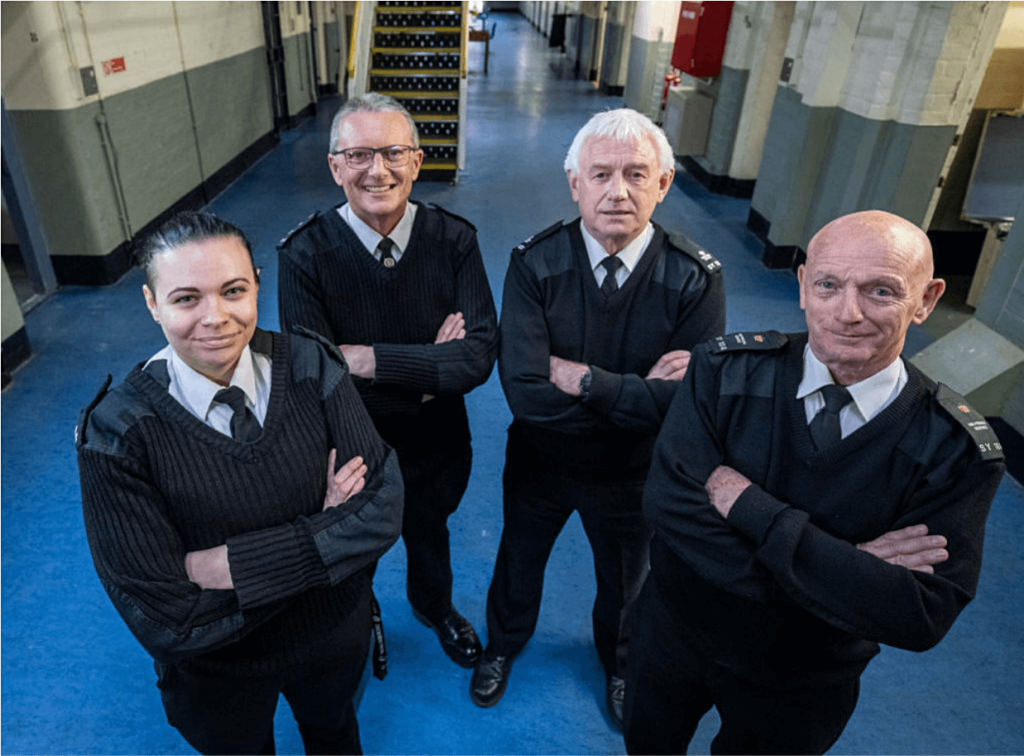
Shepton Mallet invites guests to explore original cells, punishment yards and the execution room itself. By day, it offers deeply researched guided tours, self-guided exploration with interpretive materials, a museum, café and gift shop. By night however, the tone shifts.
Organised ghost tours and full overnight investigations allow visitors to remain within the prison after dark, when the heavy doors close and the corridors return to something closer to their former compelling stillness. These events focus on sharing the building’s recorded history and infamous reported phenomena. To fully understand that atmosphere, and maybe what explains it, we must see what these walls have witnessed.
Four Centuries of Confinement
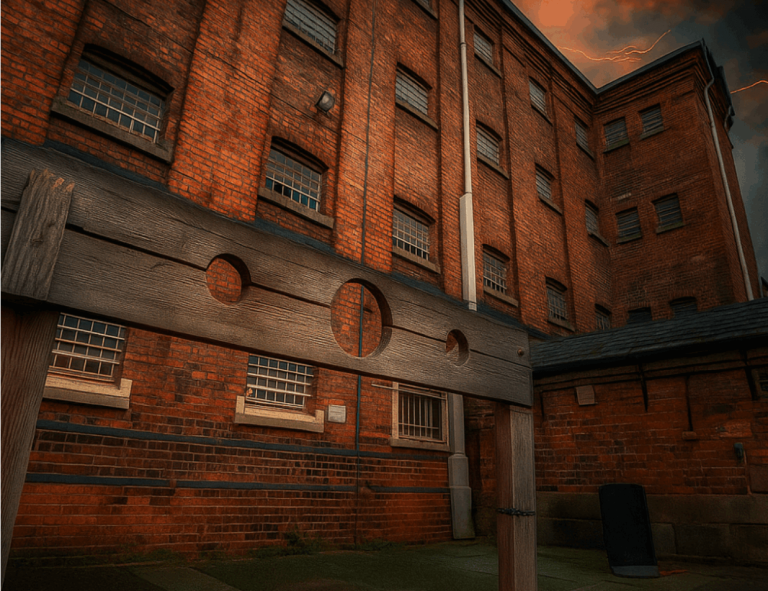
Established in 1625 and originally known as HMP Cornhill, the prison took its former name from Cornhill House, a property purchased from a local vicar to house the county’s offenders. For over 400 years, it functioned almost continuously as a site of incarceration.
Seventeenth-century prison life was harsh even by the standards of its age. Men, women and children were often confined together in cramped, insanitary conditions. There was no meaningful segregation, and discipline was swift and physical. Disease flourished and punishment was public and cruel.
Shepton Mallet became indelibly associated with the aftermath of the Monmouth Rebellion in 1685. Following the accession of James II, Protestant opposition rallied behind James Scott, Duke of Monmouth. His ill-fated campaign ended at the Battle of Sedgemoor, after which captured rebels faced the infamous Bloody Assizes.
Ten of Monmouth’s supporters were executed at Shepton Mallet by hanging, drawing and quartering — their remains displayed as a warning. It was punishment designed not simply to end life, but to extinguish hope.
In 1688, the Bloody Code expanded capital punishment to include a wide array of property offences. The prison became not only a place of detention, but a threshold between life and death.
Reform or Harm?
By the nineteenth century, penal reform brought structural change. New wings were added, and following the 1865 Prisons Act, silence and hard labour replaced earlier chaos.
Prisoners were confined to their cells for long periods, permitted out only for work or worship. They were forbidden from speaking to one another. Rehabilitation was pursued through discipline and exhaustion.
The treadwheel — still visible today — stands as a stark reminder of this era. Inmates would climb its rotating steps for hours, powering machinery through relentless physical effort. Monotonous. Punishing and Painful. Intentionally so.
Executions continued behind closed doors. Between 1889 and 1926, at least seven men were hanged there for murder. Their bodies were buried in unmarked graves within the prison grounds — a practice that somehow lends a gravity and eeriness to the ground itself.
The Glasshouse and Wartime Executions
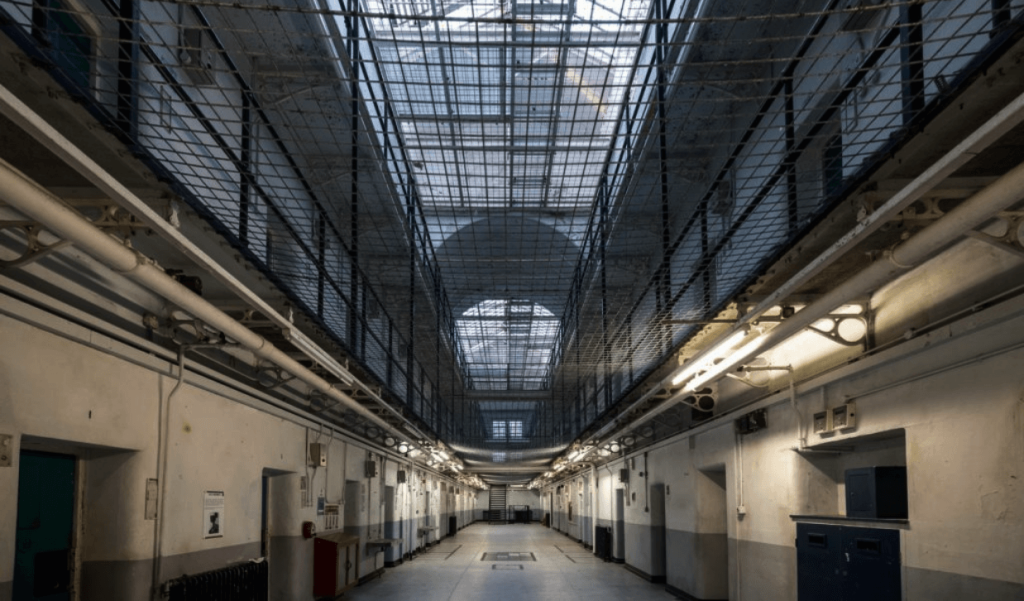
In 1930, Shepton Mallet briefly closed. But with the outbreak of the Second World War, it reopened as a military prison known as “The Glasshouse.”
Used first by British forces and later by the Americans, the prison saw the construction of a new execution block. By the end of 1944, it held hundreds of inmates.
Eighteen American servicemen turned criminals were executed there between 1942 and 1945, either by hanging or firing squad. Local accounts suggest that firing squads were timed to coincide with the 8am church bells after complaints about the sound of gunfire. A sinister thought indeed.
One of those executed was 18-year-old Private Lee Davis in December 1943. Disturbing records show that upon seeing the gallows, he became hysterical, repeatedly crying out in terror that he was about to die. Obviously his protestations didn’t alter his fate and he was buried within the prison grounds. Some are convinced that he never left.
In 2017, a tour guide recounting Private Davis’ execution in the condemned cell, felt a sudden sharp pain on his hand, later discovering a mark resembling a cigarette burn. Private Davis had reportedly been a heavy smoker and had chain smoked as he awaited his fate. The guide believes that the restless and unhapy soul of Private Davis was somehow responsible for his injury – one that left a scar still visible today.
When the Americans departed in 1945, Shepton Mallet reverted to British military use before returning to civilian operation in 1966.
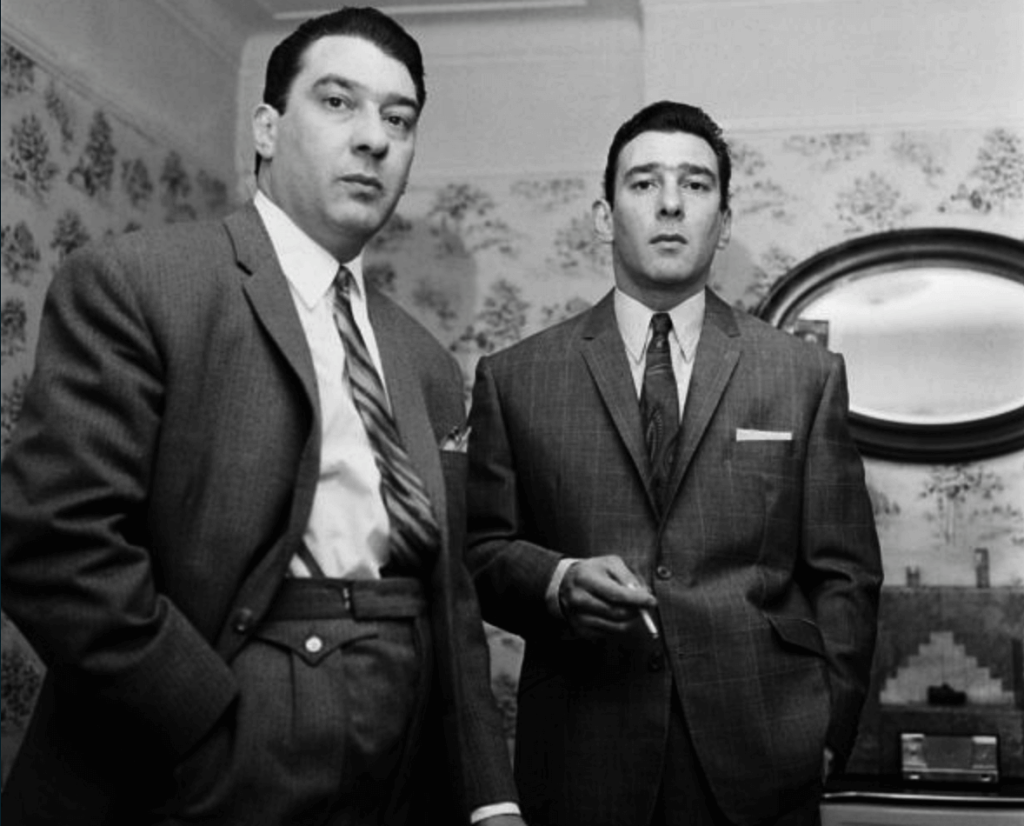
Among its more notorious twentieth-century inmates were the Kray twins — Reggie and Ronnie — imprisoned here in 1952 following an assault on a police officer. Their violence within the prison ultimately led to their dishonourable discharge from the army, foreshadowing the criminal infamy that would follow.
The prison continued in various roles — as a training facility, segregation unit and resettlement prison — until its final closure in 2013.
In 2017, it reopened not as a place of punishment, but of historical interest.
But it seems that not everything is willing to leave the past behind.
Reports of unexplained activity at Shepton Mallett stretch back to its days as a working prison.
Officers back then described darting shadows and white figures on staircases. Some refused to work night shifts. Prisoners complained of feeling intense cold in specific cells, requesting additional blankets against sudden and dramatic drops in temperature.
Today, visitors and staff alike frequently report a whole range of ghostly experiences and unexplained activity.
Sudden cold spots grip previously still air.
The sounds of heavy and purposeful footsteps eerily echo through the building.
The chilling and disembodied sound of whistling which appears to have no source.
Cell doors open and slam shut with a loud bang when nobody is near them.
The sensations of being touched by unseen hands.
The sudden and sweet scent of perfume fills the air and disappears just as quickly.
The heart stopping sound of a woman’s voice softly calling out “Hello” from the darkness.
The apparition of a woman in a white dress is among the most enduring accounts. She is said to have been a prisoner sentenced to death for murdering her husband, who was permitted to wear her wedding dress on her final night, only to be found dead just before her execution. Does she still walk the prison corridors?
With four uninterrupted centuries of documented trauma, execution and confinement within a largely preserved original structure, Shepton Mallet prison provides its guests with a captivating experience. Visitors can stand where rebels awaited their horrific fate, where Victorian inmates climbed the treadwheel in silence, the condemned spent their final hours, and wartime firing squads assembled at dawn.
An enormously popular destination for the country’s ghost hunters – a place where the past refuses to stay silent.
Visit the museum website for more information – Shepton Mallet Prison.