
- Get directions
- Call now
- Bookmark
- Share
- Website
- Send an email
- prev
- next
In brief
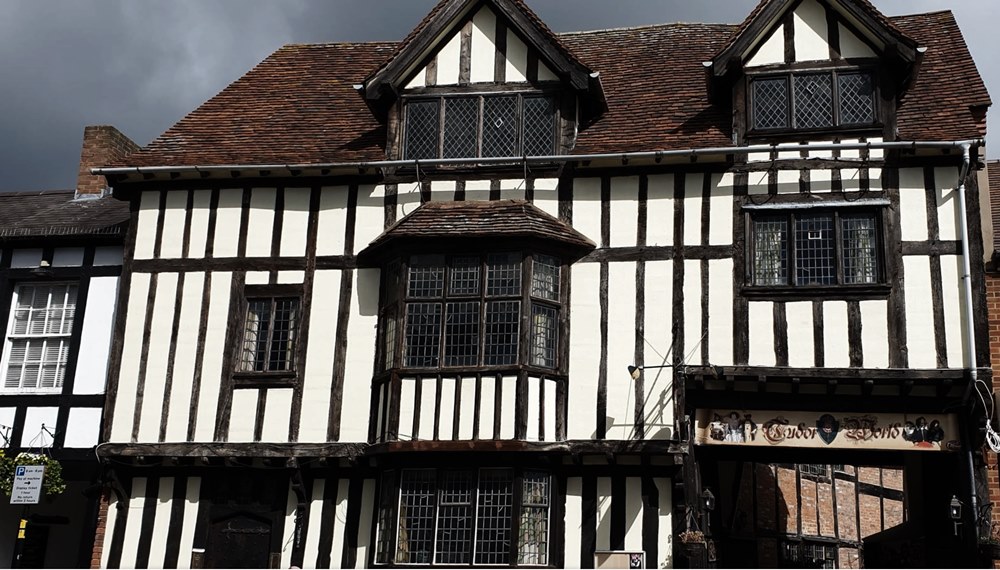
The Tudor World museum’s striking timber-framed building has stood through hundreds of years of turbulence and momentous periods of English history. Bustling with creepy activity and ghostly houseguests, this historical treasure remains a firm favourite of paranormal fans.
Category
About
In a building over 500 years old and with genuine links to William Shakespeare, Tudor World in Stratford-upon-Avon is an absorbing, fun, and engaging museum dedicated to the Tudor period of English history.
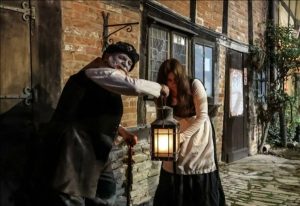
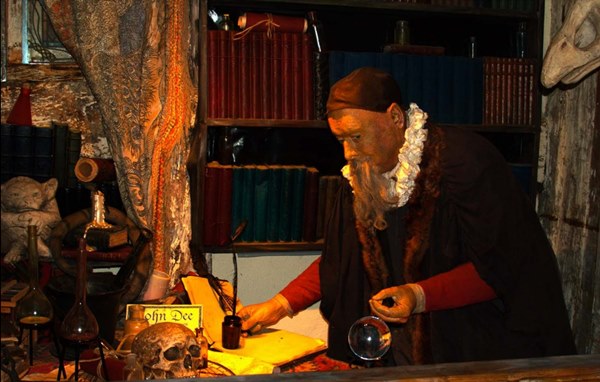
With an impressive array of artefacts, information, displays, and interactive experiences, visitors can fully explore the reality of life for the resident townsfolk from hundreds of years ago. The museum also runs entertaining ghost tours, which tell participants all about the spirits that haunt this fascinating place.
History
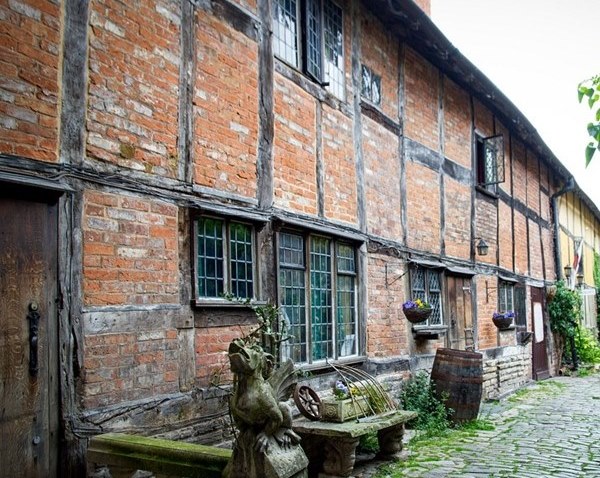
The museum, situated in Sheep Street, is perfectly housed within an atmospheric and quaint partly timber-framed building known as Shrieves House. When the first known tenant, William Shrieves, occupied the house during the reign of Henry VIII, he would doubtless never have imagined that the property would still bear his name almost 500 years later.
Little is known about Tudor archer, Mr. Shrieves, but rent records and historical registers show that a house has stood on the site since the late 15th century, although it is not known whether the property replaced a previous house or was built on a vacant plot of land.
Documents confirm William Shrieves’ occupancy in 1536, and he is noted as the previous tenant in the first surviving lease granted to his Yeoman successor, John Jeffries, in 1542.
Fires tragically took hold in the town in 1595 and 1614, and Shrieves House did not escape undamaged. In a 1987 report, however, the Stratford-upon-Avon society noted that the arrangement of the existing property still corresponds with that of a 1597 inventory and that it appears only the rear wing and front range were reconstructed.
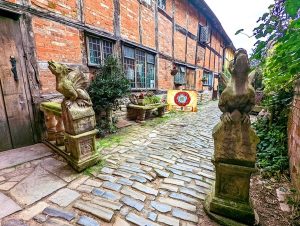
Little other changes were made to the house until the early 1950's, when it was lovingly refurbished by local business figure Eleanor Waldron. Mrs. Waldron found the basic structure of the property to be sound and consulted historical specialists to ensure that the right techniques were employed to properly preserve the historical property and its original construction.
During work, Mrs. Waldron discovered a wooden partition in one of the upstairs rooms, which led to a small cupboard. During the reign of Queen Elizabeth I, when house searches were conducted and Catholics were persecuted, the space had clearly provided a concealed hideout for any visiting priests.
Connection with William Shakespeare
Whilst cynics could be forgiven for assuming that any existing Tudor house in Stratford-upon-Avon would automatically claim to have a connection with William Shakespeare, in the case of Shrieves House, a link between its occupants and the famous poet does appear genuine.
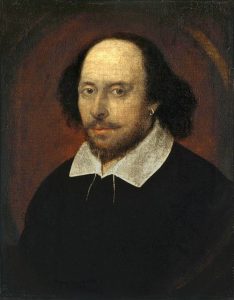
The property’s leaseholder in 1582 was a Sergeant of the Mace named William Rogers, who also ran a tavern at the house. William’s wife Elizabeth was the sister of Henry Walker. It is well known that William Shakespeare and Henry Walker were good friends and that Shakespeare was godfather to Henry’s son, William.
Some say that William Rogers was the inspiration for Shakespeare’s fictional character, Sir John Falstaff, but others argue that Falstaff was based on a distinguished soldier, Sir John Oldcastle.
There was a further connection as William and Elizabeth Rogers’ daughter, also Elizabeth, was a good friend of Shakespeare’s daughter, Susanna, and her husband, Dr. John Hall. Susanna is featured in an 1890 engraving below seated to her father's left.
The couple introduced Elizabeth to their long-standing friend, Matthew Morris, who became her husband. After their marriage, Elizabeth and Matthew lived at Shrieves House.
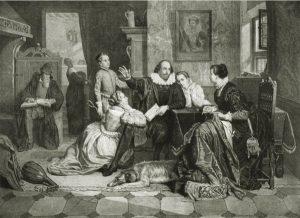
Did Shakespeare and his daughter Susanna attend the wedding celebrations at the house in October 1613? Records also show that the lawyer Elizabeth Rogers appointed to oversee her will was the same as one instructed as a trustee by William Shakespeare.
With validated connections and considering that Shakespeare's house was just a short walk away from Sheep Street, it’s perfectly plausible that Shakespeare and his daughter would have been visitors to Shrieves House and its tavern to socialise with the Rogers and Morris families.
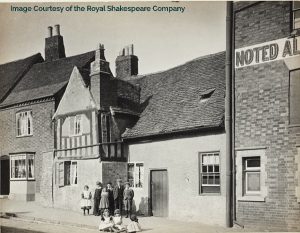
Sheep Street in 1899
John Davis
When featuring the many paranormal entities that still roam the historical Shrieves House, many speak of an 18th century serial killer named John Davis having lived at the property. It is claimed that Davis terrorised the town, assaulting and murdering women before being arrested at the house and later hanged for his crimes. There, however, appears to be no evidence to support the claim that a serial killer operated in Stratford-upon-Avon or that anyone named John Davis/Davies ever lived at Shrieves House.
It is likely that an incident of wounding committed in Sheep Street by a John Davis in 1867 has been exaggerated over years of local folklore and elevated to a case of serial murder.
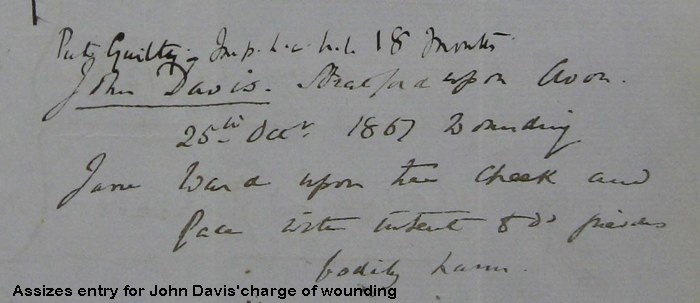
Court reports for Warwickshire Assizes dated 11th December 1867 confirm that on 25th October, John Davis (35) a maltster of Emms Court (a row of cottages on Sheep Street) was convicted of wounding with intent after stabbing his neighbour, Jane Ward, twice in the face with a penknife (see gallery image).
It seems that Davis, described as a large man and former soldier, had long accused Jane of being “an old witch” and had blamed her for the presence of headless ghosts and paranormal activity at his house. He had apparently believed that drawing her blood would somehow end a curse that she had put upon his family.
Davis was sentenced to 18 months imprisonment when the judge remarked that had it not been for evidence of his previous good character, the sentence would have been one of penal servitude (hard labour). There is no evidence to suggest that John Davis ever visited or had links with Shrieves House.
Ghostly activity
- The figure of a large man in a dark cloak and big floppy hat has been seen on more than one occasion standing by the entrance gates to Shrieves House before disappearing.
- Gentleman visitors often feel they've been tapped on the shoulder when standing on the courtyard, with some claiming this could be the ghostly hands of the "ladies of the night" who once used the area to find clients.
- Many guests complain of feeling suddenly unwell or dizzy at the entrance to the house.
- The sound of throaty, cackling laughter is heard with no explanation.
- The ghost of a civil war soldier has been frequently spotted standing at the top of the main staircase. Is he also responsible for the feelings of hair being touched people often describe when in the same area?
- A dark figure has been seen following groups of visitors as they look around the building.
- The ghost of a small girl is a regular visitor, with some witnesses describing her as having a burn or some kind of injury to her face. Staff have named the child Lucy. Is this the same ghostly child that has been seen looking out of the window when the museum is closed?
- An unsuspecting visitor assumed that the figure of a woman in period clothing was a member of staff dressed as part of an exhibition. She was shocked to find that the woman had disappeared and that none of the team had been dressed in period outfits on that day.
- Sensations of being grabbed and pushed plus the feeling of someone rushing past as though in a great hurry have all been reported.
Video
Location
-
Sheep Street, Stratford-upon-Avon CV37 6EJ, UK
Access
Please note that visitors using wheelchairs can access the ground floor of the museum, which is fitted with ramps. Due to the age of the building, there are regretfully no facilities to enable wheelchair users to access the first floor.
Visitors with limited mobility should note that, as a Tudor property, floors can be uneven and stairs steep and narrow. Staff are happy to assist wherever possible.
Please call the museum on 01789-298070 for further information or to discuss specific requirements.

#/media/File:Shakespeare's_family_circle.jpg)
Add a review