
- Get directions
- Call now
- Bookmark
- Share
- Website
- Send an email
- prev
- next
In brief
Dripping with history, intrigue, and atmosphere, this internationally famous and supremely haunted old coaching inn that has inspired books, songs, films, and TV productions really needs no introduction to the paranormal community.
Category
About
Overflowing with character, romantic charm, a bewitching history, and masses of ghost sightings, Jamaica Inn in the Bolventor hamlet on Bodmin Moor checks off every box on the ghost hunter’s list.
Once a smuggler’s hideaway and rife with folklore and legends, the stunning Jamaica Inn is arguably the most famous of all the UK’s many captivating old coaching inns. Achieving legendary status after author Daphne Du Maurier’s stay in 1930 inspired her to write the gripping novel and instant bestseller Jamaica Inn, this haunted old hostelry is visited by thousands every year.
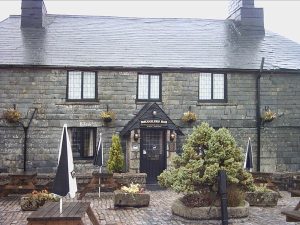
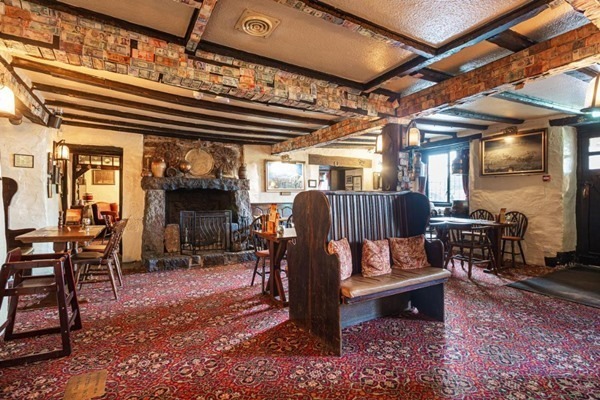
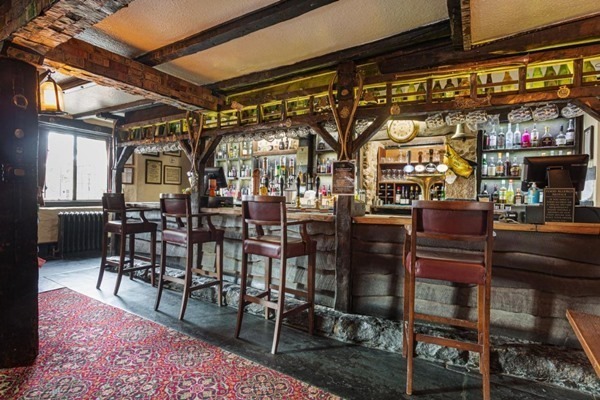
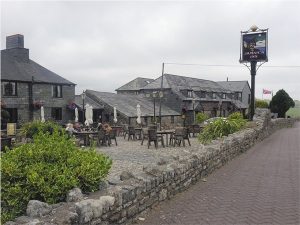
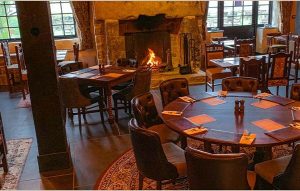
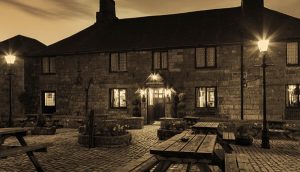
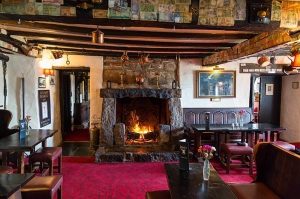
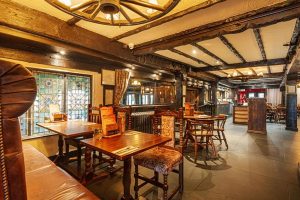
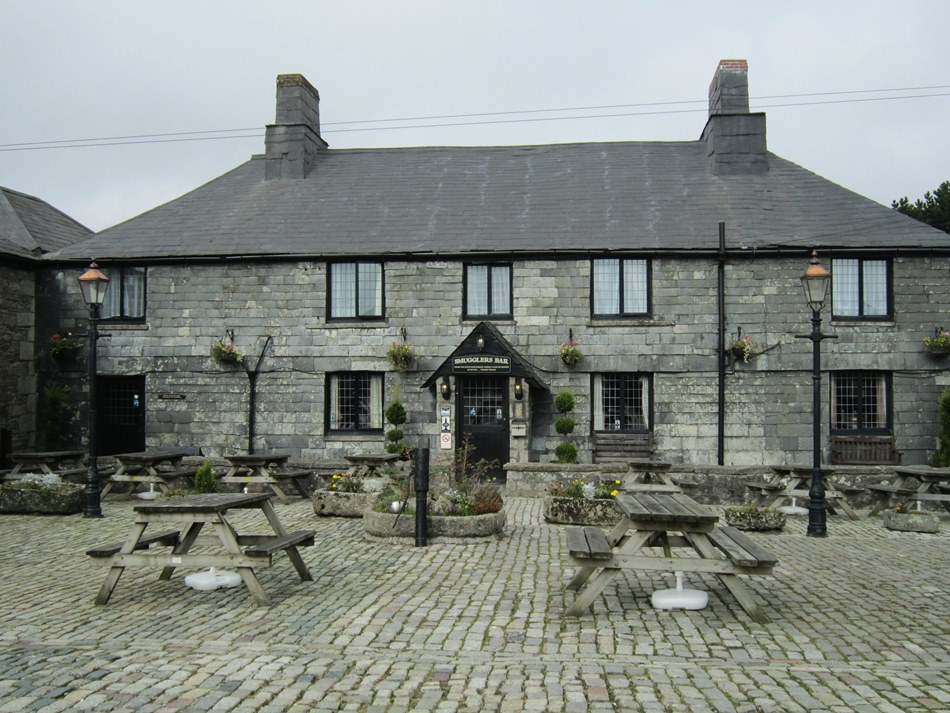
With the inn’s swinging sign creaking in the wind outside, traditional wooden beams, a cobbled courtyard, and stone fireplaces that house roaring winter fires, it’s easy to imagine the inn’s 18th-century patrons seeking refuge from the glacial chill of the merciless moorland.
Now an inviting dog-friendly hotel, bar, and restaurant, guests can enjoy a cosy stay in the recently added wing with breathtaking views over Bodmin Moor. Brave ghost hunters, however, would probably prefer to opt for the beautifully preserved Rooms 3–12, which are accommodated in the original part of the inn and are the scene of many ghost sightings (see Ghostly Activity below).
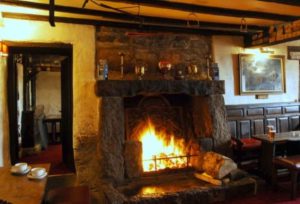
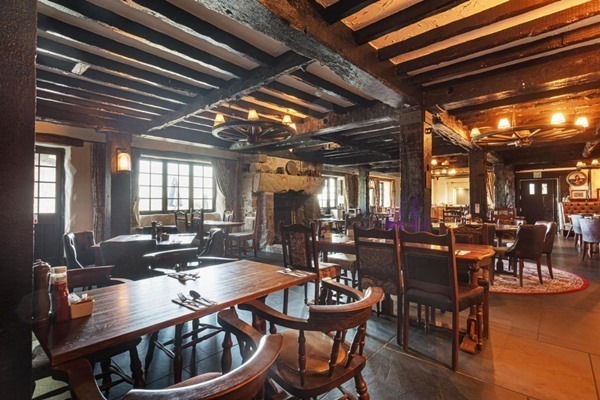
The beautiful and characterful olde-worlde restaurant serves a wide range of dishes, all home-made at the inn and using local and fresh produce.
Jamaica Inn also houses a well-stocked farm and gift shop and fascinating museums packed with impressive collections of artefacts devoted to the history of smuggling, the history and folklore surrounding Jamaica Inn, and to the gifted writer Daphne Du Maurier, whose spellbinding story immortalised the smuggler’s den.
With both organised and private ghost hunts available with the inn’s own resident paranormal investigation team, Jamaica Inn really is an unmissable location for the serious ghost hunter.
History
Built in 1750 on the windswept and ruggedly beautiful Bodmin Moor, the coaching inn we know today was first named the New Inn. It was built on land belonging to the eminent Trelawny family, who had owned property in Cornwall since at least 1421.
The inn was surrounded by 80 acres of bleak farmland, crudely formed unmade roads, and rough pathways, with a medieval old packhorse track providing the only route across the moor. The new innkeeper improved access by placing stones at quarter-mile intervals showing the direction to the inn, where rest and refreshment were offered to travellers crossing the isolated heathland.
The New Inn becomes Jamaica Inn
By 1778, traffic to the inn had vastly increased, and the premises were extended to include a coach house, stables, and a tack room, which adopted an L-shape for the main part of the site that remains today.
In honour of the illustrious Trelawny landowners, the New Inn was renamed Jamaica Inn after MP’s Edward Trelawny in 1739 and Sir William Trelawny in 1767 had been appointed governors of Jamaica.
The first official evidence of the inn’s ownership is provided by the existence of a 99-year lease drafted in 1784, naming the innkeeper as John Broad. The tenancy was taken over by John’s brother James and remained in the Broad family until 1828.
A smuggler’s den
Around the same time that trade began to thrive at Jamaica Inn, smuggling was widespread and profitable in Cornwall, with its miles of deserted coastline and wild landscapes providing perfect terrain. The practice had arisen after exorbitant taxes were introduced on imported goods such as tea, brandy, silk, and tobacco to help fund the high cost of wars with France and the USA.
Situated on the edge of the treacherous and remote Bodmin Moor, the secluded Jamaica Inn presented the perfect sanctum to the smuggling gangs seeking to hide away their fruitful contraband. The innkeepers of the day would undoubtedly have sold the illegally obtained wines and spirits to their customers.
Smuggling brought great wealth to the area and transformed impoverished and hitherto honest fishermen and farmers into wealthy lawbreakers. According to popular folklore, “wreckers” worked in packs, heartlessly prowling the shorelines on stormy nights, using decoy lights to deliberately entice ships ashore, knowing they would flounder and struggle on the rugged, craggy oceanfront. Once stranded and frequently with the crew all drowned, the wreckers would await the storm’s passage, then loot the vessel of its valuable cargo or wait for it to wash ashore.
With very few prosecuted, 80-year-old William Pearce became the only person to be executed for wrecking when he was hanged at Lauceston in October 1769 for stealing a large amount of cotton from a wrecked vessel.
The early 19th century proved the halcyon days of smuggling, but by the 1830s, coast guards were introduced to protect the shorelines, making smuggling even more undercover and carrying riskier consequences for participants. By 1850, the practice had pretty much died out after the duty on imported goods was significantly reduced and such items became more freely available.
Jamaica Inn becomes tee-total
An ad dated 1842 shows that the then tenants, John Langstone and Thomas Dunn, attempted to encourage more trade from coach drivers. An early review of Jamaica Inn was also provided in 1842 by traveller Mr. C. Redding, who wrote of his stay:
“The Jamaica Inn offered coarse but clean accommodation. During the night, the wind swept in gusts across the moors from the south, driving along rain as fine as vapour.”
In 1858, under the tenancy of business-minded John Colwill, further reconstruction took place at the inn, which then offered seventeen rooms, of which eight were bedrooms.
In the early 1800s, Wesleyan Methodist membership was higher in Cornwall than in any other area of England. Its popularity is thought to be due to the Methodist focus on connecting small communities and the ability of its travelling itinerant preachers to reach different groups.
Methodists urged their followers to abstain from alcohol, believing that alcohol harmed society by causing deviance, criminality, and political corruption. With its strength and popularity increasing across the whole of Cornwall, Victorian Methodists championed the temperance cause, and by 1880, Jamaica Inn was an alcohol-free establishment known as ‘The Jamaica Inn Temperance Hotel.’ It was to remain a temperance hotel until after the Second World War.
Daphne Du Maurier's life-changing visit
It was seven years into the tenancy of landlord Bert Horrell that, in November 1930, 23-year-old writer Daphne Du Maurier came to stay at Jamaica Inn with her friend, Foy Quiller-Couch. In what would prove to be a momentous event that would lead to the inn’s legendary status and enduring fame, Daphne and Foy set out on a ride across the desolate and bleak moor on a visit to Lady Rodd at nearby Trebartha Hall. As freezing rain and darkness fell and the November fog swirled over the lonesome moorland, the two women realised with a rising sense of panic that they were hopelessly lost.
‘I came unprepared for its dark, diabolic beauty’ Daphne Du Maurier.
Upon finding a derelict barn, Daphne suggested they shelter for the night, but Foy preferred to place her faith in the ability of the horses to lead them back to Jamaica Inn. Thankfully, this proved the best solution, as the horses instinctively led the women back to the reassuring welcome of the inn’s lamplight, where they found a very worried Bert Horrell complete with lanterns and a ready search party.
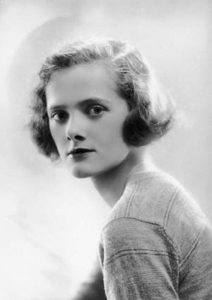
A year later, Daphne and Foy returned to Jamaica Inn, and during their stay, they were visited by the local vicar. As all three sat up by the fireside late into the night, the vicar entertained the two women with tales of the moors’ folklore, smugglers, and ghosts.
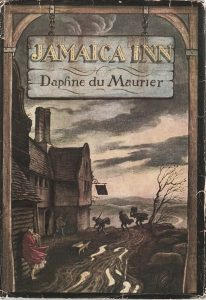
Jamaica Inn and her experiences of the dark and haunting Bodmin Moor clearly had a huge influence on young Daphne Du Maurier, as just six years after her portentous stay, her gripping novel titled Jamaica Inn was published. In a compelling plot full of suspense, the story features a young woman named Mary who is sent to live with her aunt and uncle at the inn following the death of her mother. Mary uncovers dark and dangerous secrets at the inn and is coercively drawn into a world of lawless characters, smuggling gangs, and murder. The book was an instant best seller and received international acclaim, immortalising the real Jamaica Inn, which had been the inspiration for Daphne’s writing. The image below shows the hardback cover for 1941 publication.
The book was made into a film directed by Alfred Hitchcock in 1939 and has been adapted for numerous stage and TV productions, with references also made to the tale in song lyrics.
Post-War Jamaica Inn
Following the end of World War II in 1945, Jamaica Inn was sold in a somewhat dilapidated and rat-infested state to Stanley Thomas. With linoleum-covered floors and timbers ridden with woodworm, Stanley employed a team of staff and gradually restored the building. Despite repeated applications, it wasn't until 1950 that a full alcohol license was granted.
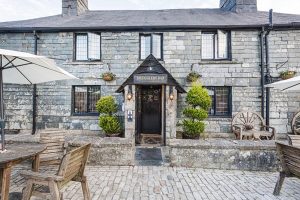
Jamaica Inn went on to have various owners, including Scottish novelist and author of The Guns of Navarone, Alistair MacLean (pictured below), who bought the inn for £27,500 in 1964. With his brother handling the running of the inn, MacLean developed the property as a hotel and converted the stable block.
Alastair MacLean sold Jamaica Inn in December 1973, and the old drinking den was completely transformed by the new owners, John and Wendy Watts.
Present-day Jamaica Inn
The Watts remained at the inn for the next forty years until they sold it in 2014, complete with 17 bedrooms, to Surrey businessman Allen Jackson. Mr. Jackson made a considerable investment in the business during his eight-year ownership, and by the time the inn was sold to its present owners, The Coaching Inn Group, in 2022, the historic hostelry had been developed into a thriving and popular hotel, restaurant, and tourist attraction with a capacity of 36 rooms.
Ghostly activity
Ghostly activity is reported so often at Jamaica Inn that the staff keep a visitors’ book for guests to record their experiences. The following are some of the most witnessed phenomena that have been described as occurring for many years:
- The apparition of a woman and child is seen walking through the wall in Room 5. It is believed that they may be the ghosts of a mother and child who stayed at Jamaica Inn the night before setting sail on a boat that tragically sank.
- Cold spots, oppressive feelings, and the sense of being watched are perceived throughout the inn. Is this the overactive imaginations of staff and guests fully aware of the notorious reputation of the place, or are people receptively sensing the layers of emotional energy left behind by centuries of past events?
- In Room 4, the ghostly figure of a man dressed in old-fashioned clothing is seen, which some maintain looks like that of a highwayman. Many guests have been shocked to wake up and find the spectral presence standing at the bottom of the bed. Some witnesses report that the figure wears a green coat and a tri-corn hat.
- Booted, heavy footsteps and muffled voices in conversation are also described. Interestingly, many unsuspecting witnesses describe the unearthly voices as speaking in a foreign language, unaware that up until around the late 1700's, the majority of Cornish people spoke an indiginous Celtic language called Kernewek.
- The disembodied sounds of clopping and whinnying horses and that of an old coach with metal wheels moving through gravel are commonly heard in the cobbled courtyard. At the time of describing their experiences, witnesses are unaware that the cobbles on the courtyard are a relatively recent addition and that historically, the area was in fact covered with gravel.
- The solid apparition of a man dressed in centuries-old clothing is seen standing by or leaning against the fireplace in the bar. Legend maintains that the ghost is that of a man who was cruelly lured out of the inn on some pretext only to be savagely murdered.
- Staff refuse to go into the generator room alone after seeing the figure of a man wearing a cape standing in the corner. Unexplained lights are also seen in this area.
- Another frequently seen ghost at Jamaica Inn is that of a man dressed in dark clothing standing outside the building. The figure has been reported as sometimes leaning against the wall of the inn or sitting on the low boundary wall. Visitors turn to take another look at the solitary man but are astonished to find that he has completely vanished.
Video
Location
-
Moor View, Bolventor, Launceston, Cornwall PL15 7TS, UK
Access
Please note that the bar and restaurant are fully accessible for wheelchair users. Visitors wishing to book a room should also note that Jamaica Inn has fully accessible rooms available for guests using wheelchairs or with restricted mobility.
Add a review