
An 18th-Century Crisis Apparition.
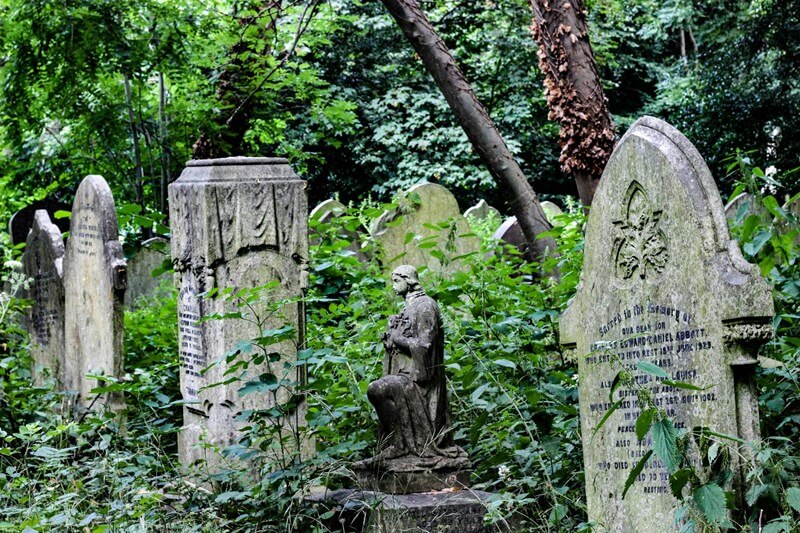
One fascinating aspect of the paranormal is the phenomenon of what is known as crisis apparitions. These refer to cases where, at the time of experiencing a crisis before death or shortly after death, a recently deceased spirit appears to someone with whom they had a close connection or emotional bond in life. The spirit usually appears in completely solid and physical form, and as they looked in life, leaving the person they appear to, completely unaware that they are witnessing the spirit of their loved one, and instead merely assuming that they are in receipt of an unexpected and surprise visit.
Accounts of crisis apparitions have been reported for hundreds of years. One early and fascinating account of such an experience was provided in 1859 by Derbyshire-born nineteenth-century writer and poet William Howitt. For the purposes of contributing to writer Robert Dale’s book, “Footfalls on the Boundary of Another World,” Mr Howitt (pictured below) recounted an experience his mother had in 1792, just a few months before his birth, when her brother, Francis, appeared to her at the time of his tragic death in another part of the village.
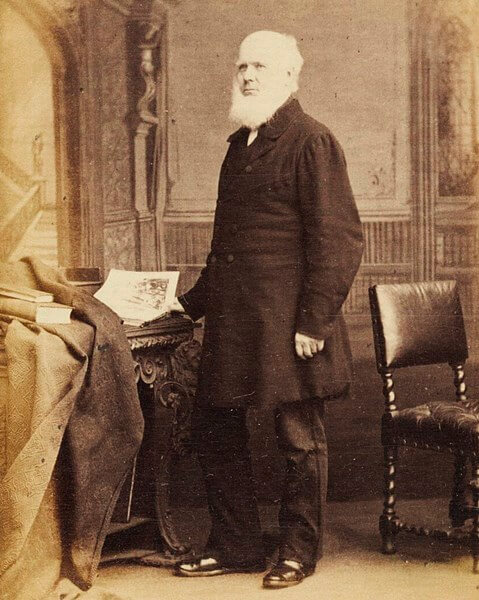
William Howitt wrote:
“The circumstances you desire to obtain from me is one which I have heard many times related by my mother. It was an event familiar to our family and the neighbourhood and is connected with my earliest memories, having occurred about the time of my birth at my father’s house at Heanor, Derbyshire, where I was born. My mother’s family name, Tantum, is an uncommon one which I do not recollect having met with, except in a story of Miss Leslie’s. My mother had two brothers, Francis and Richard. The younger Richard I knew well, for he lived to an old age. The elder, Francis, was, at the time of the occurrence I am about to report, a gay young man, about twenty, unmarried, handsome, frank, affectionate and extremely beloved by all classes throughout that part of the country. He is described, in that age of powder and pigtails, as wearing his auburn hair in flowing ringlets on his shoulders, like another Absalom, and was much admired, as well for his personal grace as for the life and gaiety of his manners.
One fine, calm afternoon my mother, shortly after a confinement, but perfectly convalescent, was lying in bed enjoying from her window the sense of summer beauty and repose, a bright sky above and the quiet village before her. In this state she was gladdened by hearing footsteps which she took to be those of her brother Frank, as he was familiarly called, approaching the chamber door. The visitor knocked and entered. The foot of the bed was towards the door, and the curtains at the foot, notwithstanding the season, were drawn to prevent any draught. Her brother parted them and looked in upon her.
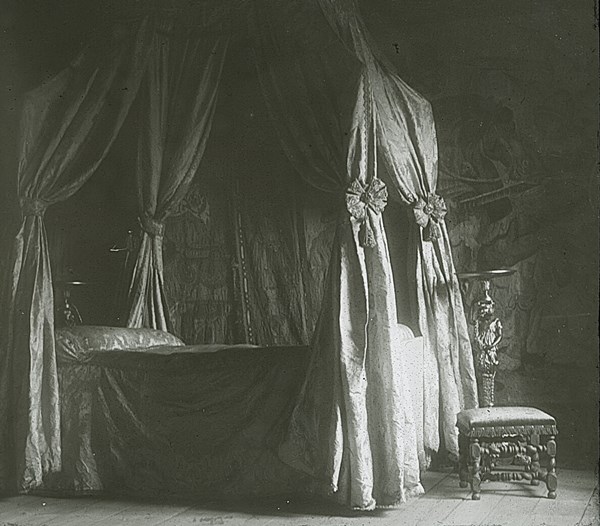
His gaze was earnest and destitute of usual cheerfulness, and he spoke not a word. “My dear Frank”, said my mother, “how glad I am to see you. Come round to the bedside; I wish to have some talk with you.” He closed the curtains, as if complying, but instead of doing so, my mother, to her astonishment, heard him leave the room, close the door behind him and begin to descend the stairs. Greatly amazed, she instantly rang, and when her maid appeared, she bade her call her brother back. The girl replied that she had not seen him enter the house. But my mother insisted, saying, “He was there, but this instant, run! Quick! Call him back! I must see him!” The girl hurried away, but after a short time returned, saying she could learn nothing of him anywhere; nor had anyone in or about the house seen him either enter or depart.
Now my father’s house stood at the bottom of the village and close to the high road, which was straight, so that anyone passing along it must have been seen for a much longer period than had elapsed. The girl said she had looked up and down the road, then searched the garden, a large old-fashioned one with shady walks, but neither in the garden nor on the road was he to be seen. She enquired about the nearest cottages in the village, but no one had noticed him pass.
My mother, though a very pious woman, was far from superstitious, yet the strangeness of this circumstance struck her forcibly. While she lay pondering upon it, there was heard a sudden running and excited talking in the village street. My mother listened to it; it increased. Up to that time, the village had been profoundly still, and she became convinced that something very unusual had occurred. Again, she rang the bell to enquire about the cause of the disturbance. This time it was the monthly nurse who answered it. She sought to tranquillise my mother, as a nurse usually does a patient. “It is nothing particular, ma’am,” she said, “some trifling affair,” which she pretended to relate, passing lightly over the particulars. But her ill-suppressed agitation did not escape my mother’s eye. “Tell me the truth,” she said, “at once. I am certain something very sad has happened.” The woman still equivocated, greatly fearing the effect upon my mother in her then situation, and at first the family joined in the attempt at concealment. Finally, however, my mother’s alarm and earnest entreaties drew from them the terrible truth that her brother had just been stabbed at the top of the village and killed on the spot.
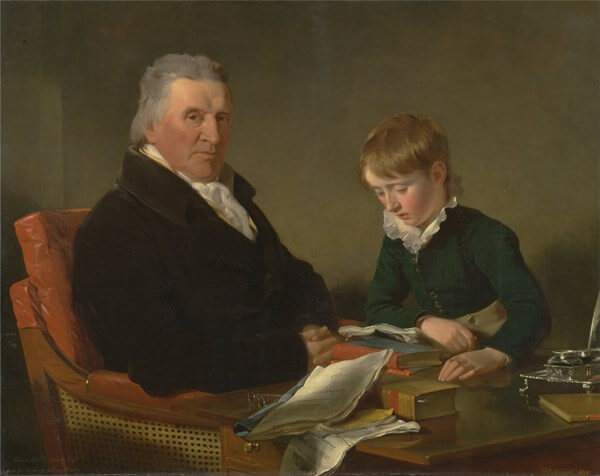
- 1809 painting of Edward Miller-Mundy’s father, Francis Mundy, and son William.
The melancholy event had thus occurred. My uncle Francis Tantam had been dining at Shipley Hall* with Mr Edward Miller Munday, member of Parliament for the county. Shipley Hall lay to the left of the village as you looked up to the main street from my father’s house, and about a mile distant from it, while Heanor Fall, my uncle’s residence, was situated to the right, the road from the one country seat to the other, crossing nearly at right angles to the upper portion of the village street, at a point where stood one of two village inns, the “Admiral Rodney,” respectively kept by the widow H–ks**. I remember her well – a tall, fine-looking woman who must have been handsome in her youth and who now retained, even past middle age, an air superior to her condition. She had only one child, a son then scarcely twenty. He was a good-looking, brisk young fellow and bore a very fair character. He must, however, as the event showed, have been of a very hasty temper.
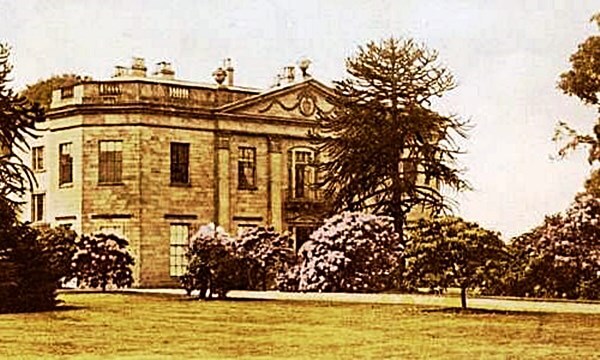
Francis Tantum, riding home from Shipley Hall (pictured below in the 1890s) after the early country dinner of that day, somewhat elated, it may be with wine, stopped at the widow’s inn and bade the son bring him a glass of ale. As the latter turned to obey, my uncle, giving the youth a smart switch across the back with his riding whip, cried out in his lively joking way, “Now be quick, Dick, be quick!” The young man, instead of receiving the playful stroke as a jest, took it as an insult. He rushed into the house, snatched up a carving knife, and, darting back into the street, stabbed my uncle to the heart as he sat on his horse, so that he fell dead on the instant into the road.
The sensation throughout the quiet village may be imagined. The inhabitants who idolised the murdered man were prevented from taking summary vengeance on the homicide only by the nearest constable carrying him off to the office of the nearest magistrate. Young H–ks** was tried at the next Derby Assizes, but justly (no doubt taking into view the sudden irritation caused by the blow), he was convicted of manslaughter only, and after a few months imprisonment, returned to the village, where notwithstanding the strong popular feeling against him, he continued to keep the inn, even after his mother’s death. He is still present, to my recollection, a quiet, retiring man, never guilty of any other irregularity of conduct, and seeming to bear about him the constant memory of his rash deed – a silent blight upon his life. So great was the respect entertained for my uncle and such the deep impression of his tragic end that so long as the generations lived, the church bells of the village were regularly tolled on the anniversary of his death. On comparing the circumstances at the exact time at which each occurred, the fact was substantiated that the apparition presented itself to my mother almost instantly after her brother had received the fatal stroke.
*The beautiful Shipley Hall was demolished in the 1943 due to structural damage caused by nearby coal mining operations.
**In the original 1859 account the surname of Francis Tantum’s killer, Richard Hanks and his mother was written as ‘H–ks’ to protect their identities.


_-_Google_Art_Project.jpg)