
- Get directions
- Call now
- Bookmark
- Share
- Website
- Send an email
- prev
- next
In brief
Once the scene of public executions and the dreaded destination of hundreds of desperate convicts, former Bodmin Jail is now a fabulous museum steeped in ghost sightings and stories of unrested souls.
Category
About
Sitting on the edge of the harsh and lonely Bodmin Moor are the fascinating Bodmin Jail Museum and the luxurious Bodmin Jail Hotel. Converted from the infamous penitentiary that was built by Napoleonic prisoners of war in 1779, the tourist attraction and sumptious hotel have a dark and sinister past.

Using advanced technology, impressive sets, and special effects, the museum takes visitors on a historical journey through time and provides an award-winning experience of life for the convicted and condemned inmates of Bodmin Jail.
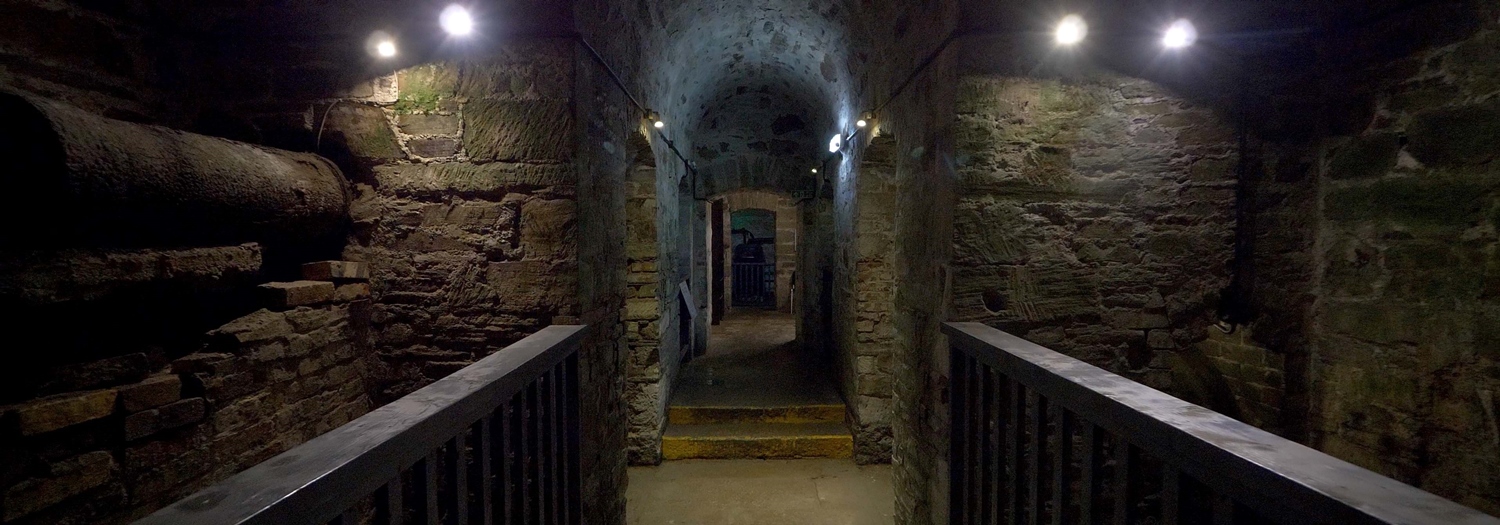
Featuring a walk through the eerie corridors of the former naval wing, a discovery of the prison’s dark tales and myths, a visit to the Victorian hanging pit, a celebrated Dark Walk tour, and much more, the museum provides an entertaining, thrilling, and enlightening event.
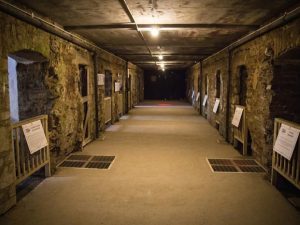
With delicious food served in the Jolly Hangman's restaurant, and an exciting range of ghost walks, tours, and paranormal events, the Bodmin Jail attraction makes for an eerie and exceptional venue for the avid ghost hunter.
The main prison building has been beautifully converted into a luxurious 4-star hotel, where each of the rooms is constructed from three former cells.
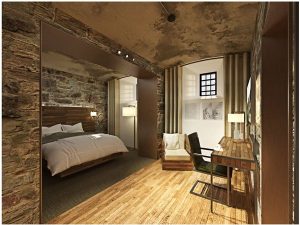
What could be better for the serious ghost hunter than a stay in a former prison cell and a visit to the museum experience?
If you are brave enough to book a stay, please see the Bodmin Jail Hotel listing in the Haunted Hotels category of our Haunted Places to Stay for further information.
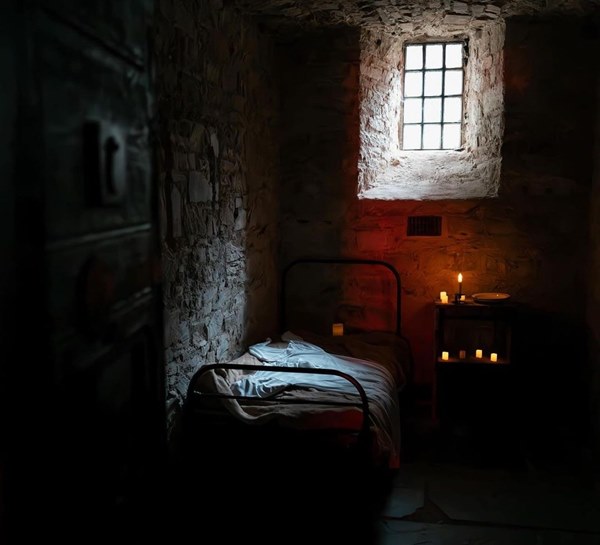
History
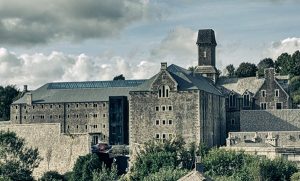
Dominating the moorland, the forbidding 18th-century Bodmin Jail was built of granite from a local quarry during a period of prison reform lobbied for in the reign of King George III.
Championed by campaigner John Howard, the purpose-built penitentiary was constructed by military engineer Sir John Call and included individual cells and separate wings for men and women, hot water, a chapel, and workshops. Considered to be the ultimate in modern prison design, the regime was nevertheless extremely tough and focused on achieving rehabilitation through harsh punishments, solitary confinement, and religious teachings.
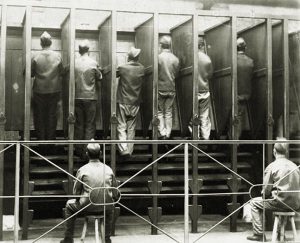
Bodmin Jail quickly became notorious for its severe treatment of prisoners convicted of relatively minor crimes. Punishments included the cruel and exhausting “everlasting staircase,” a type of treadmill on which prisoners would spend hours to power a shaft that milled the prison’s corn. The image below shows the everlasting treadmill being used at HMP Pentonville in 1895.
Fifty-five prisoners, including eight women, were publicly executed at Bodmin, which proved such a popular attraction that a train station was built especially to accommodate the influx of spectators.
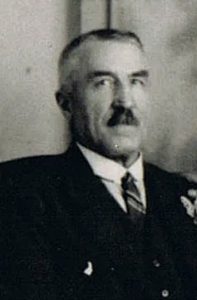
The last prisoner to be executed at Bodmin Jail was 23-year-old miner William Hampton, who was hanged in 1909 for the murder of his girlfriend, Emily Tredrea. Hampton had strangled Emily after she tried to end their relationship. Upon convicting Hampton, the jury recommended mercy, and his solicitor petitioned for a reprieve from execution. This was, however, to no avail, and he was hanged just weeks later by official executioner brothers Thomas (shown below) and Henry Pierrepoint. Henry’s son Albert Pierrepoint would go on to become the country’s most prolific and famous hangman, who from 1932–1956 executed around 500 convicts.
In 1850, due to serious overcrowding, which saw many prisoners sharing a single cell, Bodmin Gaol was deemed insanitary and unfit for purpose. In less than a decade, a new prison was built, designed to house greater capacity.
In 1887, the Royal Navy occupied a whole wing of the new building to imprison naval convicts. The women’s wing closed in 1911, and following the outbreak of the First World War (1914–1918), many prison officers and prisoners were called up to fight for their country. During this time, the almost empty jail was used to house many of the nation’s treasures, including the Crown Jewels and the Domesday Book.
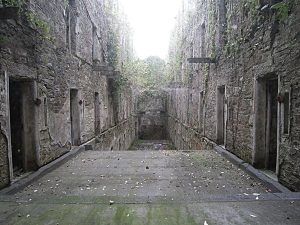
The last prisoner left Bodmin in 1923, and in 1927, after 150 years of use, this menacing institution finally closed its doors. The wings and roof were stripped of their value and reutilised. In the 1930s, the administration block of the abandoned former jail was briefly used as a nightclub and casino. After it proved impossible to detonate in the 1940s due to the thickness of its walls, the former jail sat spookily dilapidated and unused for almost 100 years.
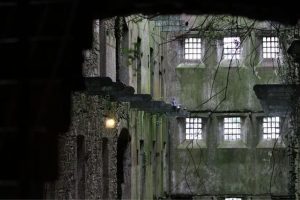
In 2004, parts of the building were developed and turned into a popular tourist destination. Then, in 2017, a wealthy businessman visiting the area fell in love with the jail site and the building’s enthralling historical narrative. Together with a huge investment, an amazing vision, and an incredible team of architects, planners, and designers, he undertook a massive project to preserve and transform the main prison building and museum into the beautiful 4-star hotel and rebranded tourist attraction that we see today.
Ghostly activity
The ghost sightings and unexplained experiences that have been reported at Bodmin Jail and which are listed below cover the whole site and include both the visitor attraction and main prison building, now Bodmin Jail Hotel.
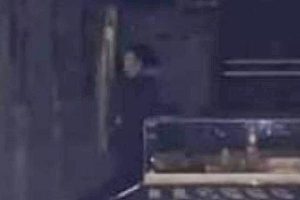
- The ghost of an anxious and disagreeable old woman has been seen by both staff and visitors who report feeling uncomfortable and unsafe in her presence. A figure dressed in old-fashioned clothing was photographed by the daughter of Events Manager Kirsten Honey in the Naval Wing (see below) and is thought to be the phantom woman seen throughout the corridors of the jail.
- Many visitors report feeling overcome with a sense of dread and hopelessness as they make their way through the prison's dank and cold cells.
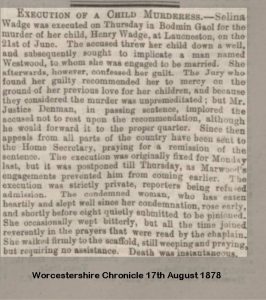
- Children visiting the prison often tell of seeing or being grabbed by a sobbing woman in a long, white dress. Is this perhaps the ghost of Selina Wadge, who was hanged at the jail in 1878 after being convicted of the murder of her disabled young son? Pleas for mercy on the grounds that she had been a good mother to her other children were ignored by the judge, and she was executed still clutching her handkerchief.
- The cries of the desperate prisoners, the commanding voices of the jailors, footsteps, loud bangs, and rattling keys are often heard echoing throughout the building.
- The figure of a man dressed in an old-style warder's uniform has also been seen on the stairs and walking the corridors of the prison.
- The apparition of a forlorn and desperate man is often witnessed wandering aimlessly around the jail. Many claim it to be the ghost of Matthew Weeks, who was hanged at the jail in 1844 following his conviction for the brutal murder of his girlfriend, Charlotte Diamond. It has been suggested that Matthew was illiterate and that a written confession used at his trial had been fabricated.
- The ghostly figure of a priest has also been spotted roaming around the former prison corridors.
Location
-
Armchair Corner, Bodiniel Road, Bodmin PL31 2PY, UK
Access
Please note that the Bodmin Jail museum/attraction is accessible for visitors using standard size wheelchairs.
Lifts and limited seating are also available for visitors with restricted mobility.
Region
A full record of any articles, websites, webpages, books, or other materials that have assisted us in the research and presentation of this listing can be found below.
www.bodminjail.org
www.bodminjailhotel.org
Jones, R (undated) ‘Bodmin Jail.’ Haunted Britain and Ireland. Available at https://www.haunted-britain.com/bodmin-jail.htm
Crowe, E. (2022) ‘How Bodmin Jail went from housing inmates to hosting hotel guests.’ Available at https://www.boutiquehotelier.com/bodmin-jail-hotel-refurbishment/
‘Bodmin Jail Hotel: The Most Unique Hotel in Cornwall!’ The Cornish Life. Available at https://thecornishlife.co.uk/bodmin-jail-hotel-unique-cornwall/
Freeman, D (undated) ‘Bodmin Gaol : Bridewell Revisited’ Available at http://www.freemanart.ca/bodmin_jail_secret_britain.htm
Worcestershire Chronicle, 17th August 1878. Accessed at https://www.britishnewspaperarchive.co.uk/
The appropriate copyright attributions for any images and videos included in this listing can be found below.
Apart from those listed below the images of the interior and exterior of the Bodmin Jail Museum used on this page are provided with permission of www.bodminjail.org. All rights reserved.
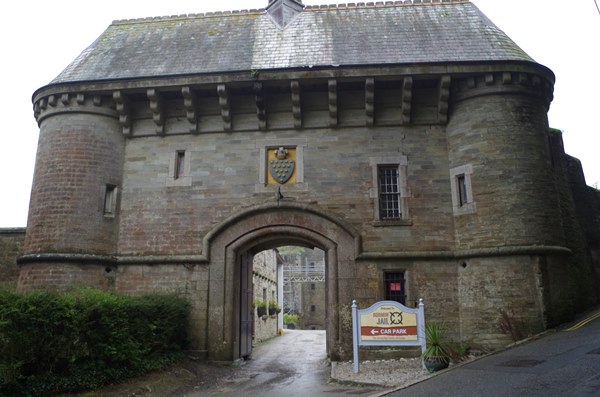
Bodmin Jail Front Gate
‘Bodmin Jail, Front Gate’ created by Luke McKernan 2015. Source: Flickr. Licensed under CC BY 2.0
Bodmin jail, front gate | Luke McKernan | Flickr
Add a review