
- Get directions
- Call now
- Bookmark
- Share
- Website
- Send email
- prev
- next
In brief
Dating back to at least 1606, and with the lives of hundreds having passed through its historical doors, the beautiful Swan Hotel is alive with atmosphere and with ghostly occurrences that proved too much for one resident chef who fled in terror, vowing never to return.
Category
About
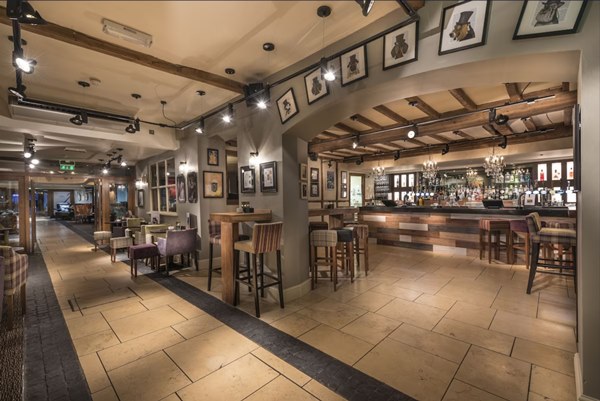
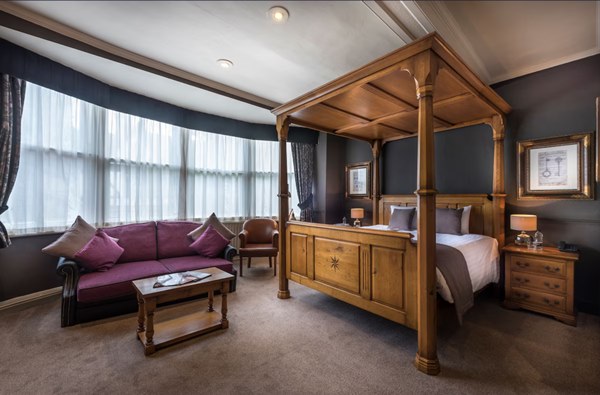
With beautifully decorated, luxurious, and inviting hotel rooms, tantalising menus using high-quality locally sourced ingredients, and a well-stocked, warm, and inviting bar, the stylish and distinctly haunted Swan Hotel provides the ideal stay for Stafford's ghost hunters and history enthusiasts.
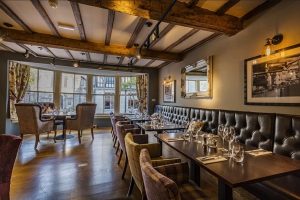
Awash with atmosphere and replete with original beams and beautiful open stone fireplaces, the hotel building can boast a captivating history that is shared with two equally significant neighbouring properties. One of these is the fascinating and comparably haunted Ancient High House museum (please see our separate listing in the haunted museums section of Haunted Places to Visit).
Starting life as a private mansion with the earliest records showing its existence in 1606, the Swan was being used as an inn by the time of the English Civil War in 1642. Refashioned in the late 1700’s, the hostelry became one of the town’s most important coaching inns, linking Birmingham with the cities of Manchester and Liverpool.
Open to non-residents and with an award-winning brassiere and coffee shop, Stafford’s stunningly historical and supremely haunted Swan Hotel makes for the ghost hunter’s perfect destination.
History
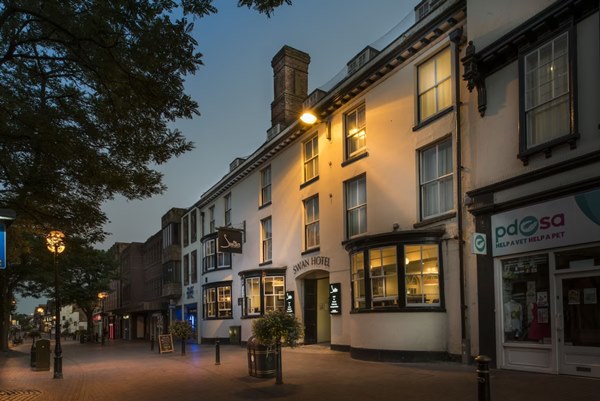
Sitting in the centre of the town of Stafford are three historic buildings that stand as stunning examples of centuries-old architecture. In the centre of the trio and to the right of the Swan Hotel is Shaw House. With its Tudor timber frame now covered and painted, the building is named after a shoemaker who lived there in the 1800’s. The upper floors of the property have formed part of the Swan Hotel for a considerable period and include a beautifully carved original Jacobean staircase.
The third building standing to the right of Shaw House is the beautifully preserved Ancient High House*. Known to be brimming with ghosts, the Elizabethan former merchant’s house built in 1595 is now a fascinating museum and is said to be the largest Elizabethan timber-framed house in the country. For a large part of the 20th century, the upper floor of the museum also formed part of the Swan Hotel.
*Please see our listing for Ancient High House in the museums section of our Haunted Places to Visit.
The earliest records for the Swan Hotel building date back to 1606, when it was owned as a private house by a local baker and alehouse keeper named Humphrey Bourne. Following Mr Bourne’s death in 1638, his widow remarried, and the couple ran a drinking den at the property known as the Swan Inn.
In 1642, after the declaration of civil war, King Charles I and his nephew Prince Rupert travelled to Stafford and stayed at Ancient High House. After a short interruption to trading during the war, the Swan Inn continued to serve the town under various tenants.
By 1781, with long-distance coach services running through the expanded roads of the town connecting Birmingham, Wolverhampton, Manchester, and Bath, the Swan became the town’s principal coaching inn. Around this time the property was refurbished with the addition of the bowed bay windows that look out onto the main street, as we see today.
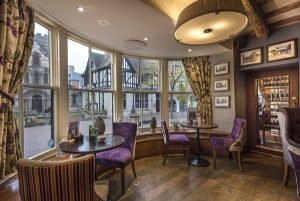
By 1818, the Swan Inn was still flourishing as a coaching inn, and a trade directory showed that the then tenant, John Hughes, had a contract to change the horses for Royal Mail coaches travelling through the town.
In 1824, achieving success after a decades-long dispute and efforts to reclaim the Stafford Baronetcy, Sir George William Stafford-Jerningham was appointed the 8th Baron Stafford and became the owner of many Stafford properties, including the Swan Hotel.
Innkeeper John Hughes died in 1822, but shortly before his death he had appointed his daughter Ann as the tenant. Ann remained the innkeeper and, buoyed by her inheritance, proved a focused and diligent businesswoman. She organised important functions and meetings, hosted successful dinners, and increased trade as the town’s main posting house, where travellers could hire riders and horses to deliver goods and packages.
Tragically, in 1827, after just five years as the innkeeper, Ann became terminally ill and died at just 39 years of age. Could Ann Hughes in fact be the resident ghostly woman dressed in a white nightgown spotted by so many staff members and guests? Perhaps frustrated by her early departure and still with her own ideas for the Swan’s progress, does Ann’s passion for the place somehow keep her tethered there?
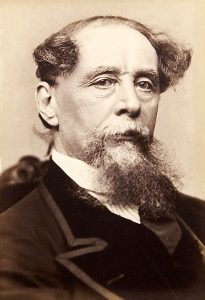
In 1852, the Swan housed a famous guest when Charles Dickens visited Stafford just after his famous novel, Bleak House was published. Sadly, he appeared to find his stay was also bleak and on his return to London, Mr Dickens wrote a scathing review in his own magazine at the time named “Household Words.” He criticised “the dingy curtains of the great bow windows,” which he complained would not meet and had to be pinned closed. He wrote that he found the bar empty and the waiter having “a silent sorrow in him.” He complained that the carpet was loose and would “writhe under my tread and take wormy shapes.” The famous writer also took issue with the sherry but thankfully was at least kinder about the food.
From the late 1890’s and with the rise of bicycle and motor car travel, the stables and coach houses were converted into garages. Having already extended into neighbouring Shaw House to create further bedrooms, further remodelling was undertaken in 1913, when the upper floors were extended even further by knocking through into the Ancient High House. Guests were enticed not only by rooms now with hot and cold running water but by a stay where King Charles I and Prince Rupert had slept in 1642.
In 1928, the building underwent further renovation, and the carriageways were closed off. In 1950, the Swan Hotel became an independent and privately owned business for the first time after the freehold was purchased from the then 14th Baron Stafford by entrepreneur and new tenant Sidney Hall.
For the next 50 years, the ownership of the Swan Hotel passed to various breweries and restaurant chains, such as the Berni Inn steakhouse. It was in the 1970’s that the hotel’s upper rooms that had originally formed part of the Ancient High House were blocked off and returned to Stafford Borough Council. After significant works, the lovely Elizabethan property was opened to the public as a museum.
By 2001, the Swan Hotel had sadly fallen into a state of neglect and disrepair when it was rescued by the Lewis family, who lovingly restored the historical town asset. After 17 years of successful business and with a desire to concentrate on running their chain of destination restaurants, the Lewis family sold the hotel to the Coaching Inn Group Ltd.
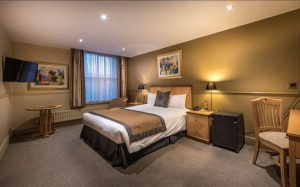
With a genuine passion for old buildings and viewing their role as custodians as much as owners, the Coaching Inn Group specialises in taking on and sympathetically restoring old coaching inns. While carefully respecting and preserving the Swan’s precious and captivating heritage, the company has painstakingly updated the lovely 31-room hotel, offering guests luxury, comfort, and an invaluable opportunity to share in a piece of the town’s incredible history.
Ghostly activity
- Locked doors are known to open and close without explanation.
- The ghost of a woman in a white dress is the most commonly reported apparition at the hotel and has been seen by both staff and guests. It is rumoured that the sad spirit took her own life at the building after being cruelly jilted by a lover. The ghostly woman once appeared to a former manager as he woke to find her standing at the bottom of his bed. Another member of staff, a live-in chef was so disturbed by her regular presence that he left his job.
- Mysterious noises and sudden drops in temperature are a regular occurrence, leaving staff baffled as no cause can be found.
- Lights are seen to switch on and off.
- Items and personal belongings are moved to different parts of the hotel by some playful and unseen hands.
Location
-
Greengate Street, Stafford, Staffordshire ST16 2JA, UK
Access
The hotel restaurant and bar facilities are all on the ground floor.
There are no rooms on the ground floor but the hotel does have a lift, although some rooms can only be accessed via additional stairs. Please contact the hotel staff on 01785-258142 if you have restricted mobility and require a room that can be accessed without any stairs.

Add a review