
The Brown Lady of Raynham Hall
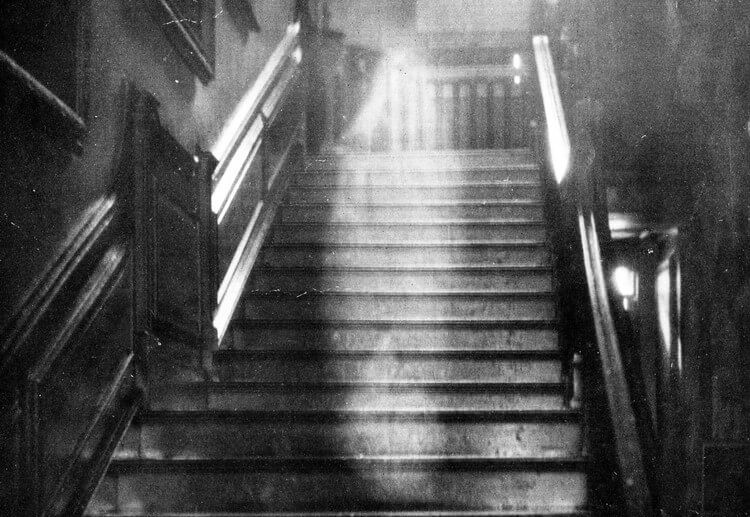
In the world of ghost lore, few figures are as instantly recognisable—or as chillingly elegant—as the Brown Lady of Raynham Hall. Allegedly captured in one of the most famous ghost photographs of all time, her spectral form descending a staircase has haunted the imaginations of believers and sceptics alike for nearly a century. But behind the image lies a deeper story: one of lost love, family scandal, and a woman’s lingering sorrow echoing through the halls of a grand country estate.
Is she truly a spirit from beyond, or simply a beautiful illusion born of early photography and enduring folklore? Join us as we explore the haunting mystery of Lady Dorothy Walpole—and the image that made her immortal.
Lady Dorothy of Raynham Hall
In the shadowed corridors of the sprawling Raynham Hall in the beautiful Norfolk countryside lingers one of the UK’s most enigmatic spirits — or so the legend goes. The Brown Lady of Raynham Hall is more than just a footnote in the annals of British hauntings; she is an icon of ghostly lore, a photograph debated for nearly a century, and a ghostly embodiment of tragedy, beauty, and enduring mystery.
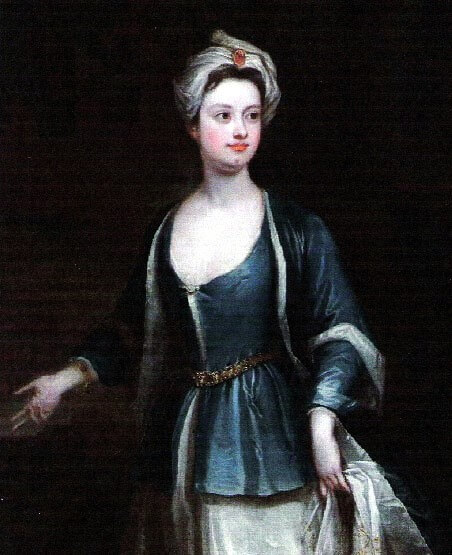
The story, however, begins not with a ghost but with a woman: Lady Dorothy Walpole (pictured below). Born in 1686 and sister of Sir Robert Walpole, who is regarded as Britain’s first prime minister, Lady Dorothy was a striking figure in early 18th-century high society. Known for her vivacity, wit, and beauty, she became the mistress of Raynham Hall after marrying the leader of the House of Lords, Charles, 2nd Viscount Townshend, in 1713. The Townshend family had owned lands around Raynham Estate since the 12th century, and the estate became their ancestral seat in the 1600s.
Unfortunately, the marriage was far from happy, and Sir Charles was said to have had an infamously explosive temper, with accounts suggesting discord rooted in jealousy, accusations of infidelity, and Lady Dorothy’s love of fashion and frivolous spending.
But behind the silks and finery was a fiercely devoted mother—who gave birth to eleven children, seven sons and four daughters, although sadly only six survived to adulthood. Lady Dorothy adored her children, but family letters reveal a heartbroken woman in turmoil after she was separated from her children, who were placed under the care of their grandmother. Did Sir Charles use the children as a weapon to punish and break the will of his carefree and vivacious wife?
A death cloaked in rumour
Tragic Lady Dorothy died from smallpox in 1726 at the age of just 39 years, with folklore maintaining she had been locked away by her wicked husband and starved to death. It was in the 1720s, however, that Sir Robert Walpole commissioned and built nearby Houghton Hall as his own grand country seat. Given his close proximity and high status, it seems highly improbable that such merciless physical cruelty meted out to Lady Dorothy by Lord Townshend would not have been discovered and stopped by her brother. What seems incontrovertible, however, is that in the period leading up to her death, Lady Dorothy certainly suffered severe mental anguish after being coldly cast aside and kept in emotional isolation, stripped of her maternal role in the lives of her precious children. Changed forever from a vibrant and happy figure to one of sorrow, weighed down by emotional pain.
The ghostly figure in a brown silk gown
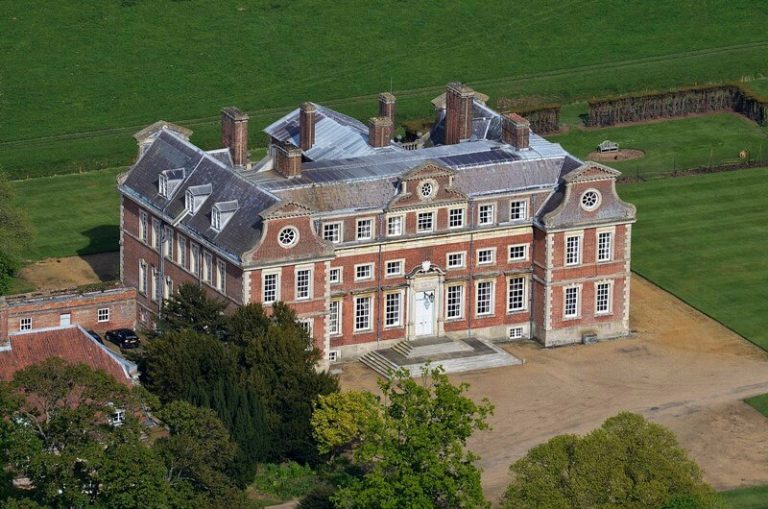
In the years that followed the tragic death of Lady Dorothy, stories began to circulate that her tortured soul was not at rest and that her ghost roamed the expansive hall (pictured below).
One of the first recorded ghost sightings was that of a Major Loftus, who had been staying at the hall as a guest of the Townshends in 1835. He described seeing a woman in a brown silk gown ascending the staircase in the early hours. Initially believing her to be a living guest, he called out—only for her to vanish into thin air.
Captain Frederick Marryat, a naval officer and a friend of Charles Dickens and the Townshend family, heard about the ghostly stories of the Brown Lady. Passionately sceptical of any tales of the supernatural, the captain went to stay at Raynham just one year after the major’s experience. Determined to debunk the claims as mere fiction, he specifically requested to stay in the most haunted bedroom and kept a loaded revolver on his person and under his pillow as he slept.
For the first few days, nothing happened, but then one evening, as he and two companions walked along one of the dimly lit corridors, they all saw the figure of a woman carrying a lamp coming towards them. At first, they just assumed it was one of the lady guests, but as they politely stepped aside to allow the figure to pass, they realised that she was dressed in the same brown dress other witnesses had described. To their absolute shock, the figure held the lamp up to her face, displaying a chilling grin that Captain Marryat later described as diabolical. Terrified and shaken, he grabbed his pistol and fired, but “the figure instantly disappeared – and the bullet passed through the door, lodging in the panel opposite.” To this day, the bullet hole remains.
Captain Marryat later confessed that the event had shaken him to the core. Though he had come to Raynham to dismiss the legends, he left convinced that something unexplained—and deeply unsettling—inhabited the house.
Gwladys, Dowager Marchioness Townshend was a resident of Raynham Hall in the 1920-1930s and firmly believed that the hall was haunted. In 1936, but before the famous photograph was taken, she wrote a book of true ghost stories and included the story of the famous Brown Lady. The Dowager’s own son George and a friend claimed to have seen the ghostly figure standing on the stairs.
A Ghost Captured? The Photograph That Shook the Paranormal World
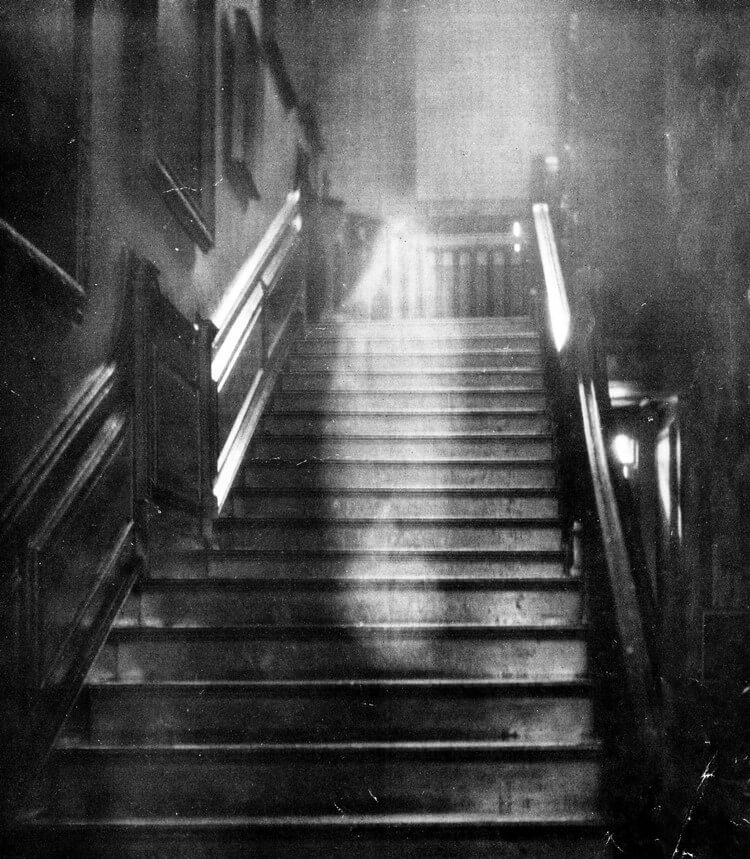
In 1936, a whole century after Captain Marryat’s terrifying encounter, two photographers, Captain Hubert Provand and Indre Shira, were on an assignment for Country Life magazine, tasked with documenting the interiors of Raynham Hall. As they captured images of a staircase, Shira claims to have suddenly seen a misty form descending the stairs. Seizing the moment, Provand took a photograph. The resulting image, published on 26th December 1936, appears to depict a translucent female figure, draped in a flowing gown or robe, gliding down the staircase. The figure was quickly said to be that of the hall’s most famous and tragic ghost, Lady Dorothy Townshend. Paranormal enthusiasts hailed it as a breakthrough—a ghost had finally been caught on film, and the legend of the Brown Lady of Raynham Hall was firmly anchored in both folklore and the paranormal world.
Scrutiny and Scepticism: Is the Photo Real?
Despite its immediate impact, the photograph has not escaped scrutiny. Over the decades that followed, researchers and sceptics have raised important questions and doubts about its authenticity.
In 2006 the late paranormal sceptic and professional ‘debunker’ Joe Nickell penned his opinions for The Independent. He concluded that, in his opinion, the photograph was fabricated and was probably the result of a staged experiment using a real person. In his view the ghostly effect had been achieved by draping a real person in some kind of cloth or material and photographing them during a slow shutter exposure.
Nickell believed that the motion blur present in the image could be caused by a real person walking slowly during a long exposure and that light reflections on the handrail suspiciously remained consistent. He believed that the figure’s dress was too symmetrical, precise and distinct to be that of a spontaneous apparition.
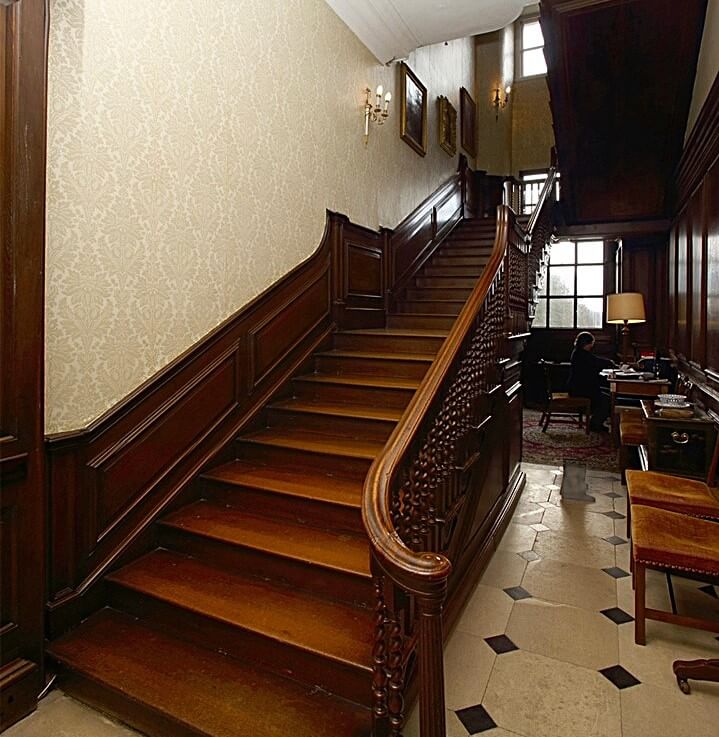
Pictured above the famous staircase at Raynham Hall as it is today. *Reproduced by kind permission of 1st-option
A comprehensive analysis published in 2017 on Academia.edu also questioned the image’s authenticity on several technical grounds. Firstly that there was no control photograph of the staircase without the ghost ever produced, thereby preventing a true comparison. Secondly, there had been signs of double exposure and the use of common photographic tricks used in the early 20th century. Finally, that the figure and the background share identical lighting characteristics, suggesting it was a staged or superimposed image.
The study stopped short of declaring it a fraud but concluded that the image was “no longer unexplained”. In other words, more likely manmade than evidence of the supernatural.
A digital re-examination
In recent years, the Brown Lady photo has undergone further scrutiny in online forums such as the ‘Skeptics Stack Exchange.’ On such arenas modern image analysts and photography experts have added further points of critique and support the prevailing view that the image is a clever illusion, not a genuine photograph of a ghostly form. The main observation for supporting their theory is that there are signs of early photographic editing methods and that the unnatural clarity of the figure and suspicious lighting effects that perfectly mimic an ethereal glow all suggest a real human and not a ghost.
A voice in defence
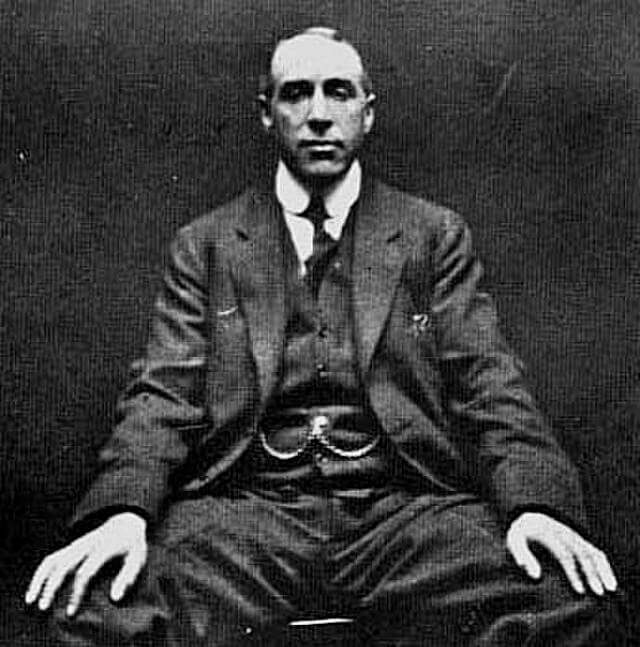
One notable exception to the tide of scepticism against the photograph was Harry Price, a respected figure in early psychical research and a specialist in photographic fraud. Shortly after the image was published, Price conducted thorough interviews with the original Country Life photographers Provand and Shira. He defended the men and found no inconsistencies in their accounts, declaring the negative “entirely innocent of any faking”. While Price acknowledged that collusion could explain the image if it were a hoax, he maintained that he found no reason to doubt the men’s honesty, stating, “I could not shake their story … Only collusion between the two men would account for the ghost if it is a fake.” Harry Price’s endorsement of the image may be outdated but does continue to lend the photograph a shimmer of credibility and, for many, has kept the debate alive.
Conclusion : A likely fake but still fascinating
In the final analysis, the image attributed to the Brown Lady of Raynham Hall is perhaps less a credible encounter with the otherworldly than a striking example of how folklore, photography, and the human imagination entwine. Though no definitive proof of fabrication exists, the cumulative weight of evidence—technical, testimonial, and analytical—tilts heavily toward a non-paranormal explanation. Double exposure techniques were well known in the early 20th century, and the photograph lacks the accompanying evidence that would help verify its authenticity. Eyewitness claims, while consistent, are not infallible. And yet, her image endures. Not because she proves the existence of ghosts, but because she embodies them, remaining the archetype of the old country house spirit – wronged, unable to rest and full of sorrow. She seals our fascination with the unseen, the tragic, and the romanticised remnants of another age.
While the famous image may no longer hold up under modern scrutiny, the story of the unhappy life of Lady Dorothy endures in the whispered testimonies of those who claim to have seen her wistful figure, drifting through the corridors, her presence heavy with grief. A carefully composed and fabricated photograph does not mean that the ghostly figure dressed in a brown silk gown doesn’t still roam the corridors of Raynham Hall. Trapped in an eternal and desperate search for the children from whom she was so heartlessly ostracised. And perhaps in the end that is what is most haunting of all.
But what do you think? Was the Brown Lady truly the spirit of heartbroken Lady Dorothy caught on camera—or is it a cleverly crafted illusion that, for a while, fooled the world? Drop us an email with your thoughts, theories, or personal encounters with the unexplained.
We’d love to hear what you believe.


.jpg)